
• Skip to primary navigation
  • Skip to main content
  • Skip to footer
Picisoclogo

PICISOC.niue.nu

The Internet Society in the Pacific

Search

Search DropdownSearch Icon Join
  • Home
  • About Us
    • What is PICISOC?
    • History of PICISOC
    • PICISOC Members
    • Code of Conduct
    • PICISOC Netiquette Guidelines
  • Board Business
    • Current PICISOC Board Members
  • Events
    • PacIGF 2023
    • Pacific Internet Governance Forum (PacIGF)
    • PacINET
    • International IGF Reports
    • ICANN Meeting Reports
    • Pacific Regional Meeting Reports
  • SIGs
    • Research and Development Partners
    • Pacific Islands Education
    • Pacific Islands FOSS
    • Pacific Islands GIS/RS
    • Pacific Islands Internet Freedom

Enabling Environment for Women’s Entrepreneurship

Enabling Environment for Women’s Entrepreneurship


Catalyzing Women’s Entrepreneurship – Creating a Gender Responsive Entrepreneurial Ecosystem

Women ICT Frontier Initiative
24-25 July
Suva, Fiji

Fiji recently launched a programme on ‘Catalyzing Women’s Entrepreneurship – Creating a Gender Responsive Entrepreneurial Ecosystem.’

This regional initiative is a 5-year programme, funded by the Government of Canada with support from the UN Economic and Social Commission for Asia and the Pacific (ESCAP).

Launched in Suva by H.E. Mereseini Vuniwaqa, Minister for Women, Children and Poverty Alleviation, the programme is aimed at strengthening entrepreneurial ecosystems that foster women’s entrepreneurship, enhancing women entrepreneurs’ access to capital through innovative financing mechanisms, and increasing women entrepreneurs use of ICT tools.

A national consultation on ‘Enabling Environment for Women’s Entrepreneurship’ was held in Pacific Harbour to carry out scoping exercises and to look at ways to strategize for achieving Sustainable Development Goal (SDG) 5: Gender Equality, and multiple related goals within the ‘2030 Agenda for Sustainable Development.’
The following three priority components of the programme will play a significant role in progressing the programmes activities and achieving the overall outcomes :

  1. A gender responsive entrepreneurial ecosystem capacity development that is focused on policy development and improving legal and regulatory frameworks, and other barriers that discourage women owned enterprises.
  2. Innovative financing mechanisms: mobilizing capital by developing innovative financing instruments to crowd in public and private funding, and supporting FinTech solutions by MSMEs by piloting innovative digital solutions to improve the access and usage of financial services for women-owned, managed or led MSMEs
  3. Women ICT Frontier Initiative: strengthening capacity of government leaders and policy makers to create an enabling environment for ICT empowered women entrepreneurs

Other important sessions and panel discussions were also held which included topics from :

  • Women’s entrepreneurship: challenges, opportunities and potential policy options
  • Creating a gender-responsive entrepreneurial ecosystem
  • Increasing access to finance for women entrepreneurs
  • Leveraging the power of ICT for women entrepreneurship
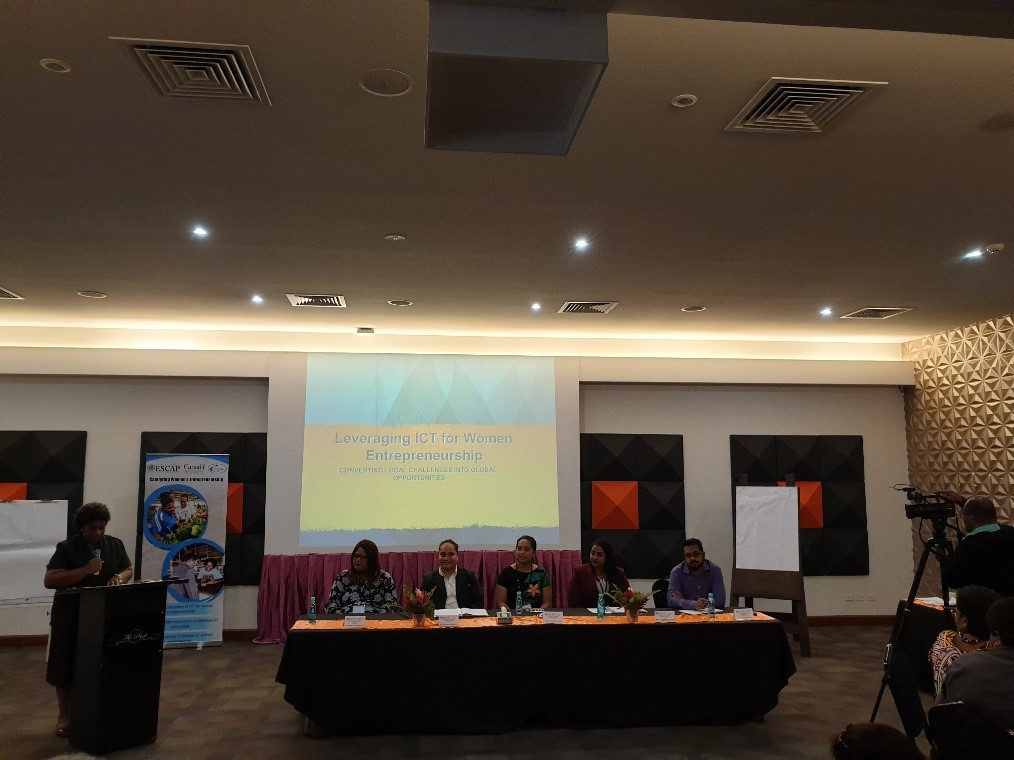
A session on ‘Women in ICT’ - Leveraging the Power of ICT for Women Entrepreneurship, moderated by Ms. Salanieta Tamanikaiwaimaro (Pasifika Nexus), was the highlight of this event, seeing some of the regions ICT experts discussing their regional development initiatives to empower more women entrepreneurship and their increased involvement in the ICT sector and policymaking roles.

Further recommendations were made on the ways to advance gender empowerment and innovation for women and girls, approaches to attract more women in Science, Technology, Engineering and Mathematics (STEM) fields, and the importance of closely engaging with law enforcement to combat violence against women within our communities, which has been a major issue for most of the Pacific Island nations.

Despite the fact that there are entrepreneurship opportunities available, women entrepreneurs still face so many barriers in the Pacific region. Access to financial services and digital financial literacy have been identified as key challenges in Catalyzing Women’s Entrepreneurship, and all of which have to be built within Government’s national policies to be completely effective and meeting global targets.

Author : Elvin Prasad is the Regional ICT Coordinator at the Council of Regional Organisations of the Pacific (CROP) ICT.

The views expressed by the author of this blog are his own and do not necessarily reflect the views of PICISOC.

September 24, 2019


Catalyzing Women’s Entrepreneurship – Creating a Gender Responsive Entrepreneurial Ecosystem

Women ICT Frontier Initiative
24-25 July
Suva, Fiji

Fiji recently launched a programme on ‘Catalyzing Women’s Entrepreneurship – Creating a Gender Responsive Entrepreneurial Ecosystem.’

This regional initiative is a 5-year programme, funded by the Government of Canada with support from the UN Economic and Social Commission for Asia and the Pacific (ESCAP).

Launched in Suva by H.E. Mereseini Vuniwaqa, Minister for Women, Children and Poverty Alleviation, the programme is aimed at strengthening entrepreneurial ecosystems that foster women’s entrepreneurship, enhancing women entrepreneurs’ access to capital through innovative financing mechanisms, and increasing women entrepreneurs use of ICT tools.

A national consultation on ‘Enabling Environment for Women’s Entrepreneurship’ was held in Pacific Harbour to carry out scoping exercises and to look at ways to strategize for achieving Sustainable Development Goal (SDG) 5: Gender Equality, and multiple related goals within the ‘2030 Agenda for Sustainable Development.’
The following three priority components of the programme will play a significant role in progressing the programmes activities and achieving the overall outcomes :

  1. A gender responsive entrepreneurial ecosystem capacity development that is focused on policy development and improving legal and regulatory frameworks, and other barriers that discourage women owned enterprises.
  2. Innovative financing mechanisms: mobilizing capital by developing innovative financing instruments to crowd in public and private funding, and supporting FinTech solutions by MSMEs by piloting innovative digital solutions to improve the access and usage of financial services for women-owned, managed or led MSMEs
  3. Women ICT Frontier Initiative: strengthening capacity of government leaders and policy makers to create an enabling environment for ICT empowered women entrepreneurs

Other important sessions and panel discussions were also held which included topics from :

  • Women’s entrepreneurship: challenges, opportunities and potential policy options
  • Creating a gender-responsive entrepreneurial ecosystem
  • Increasing access to finance for women entrepreneurs
  • Leveraging the power of ICT for women entrepreneurship

A session on ‘Women in ICT’ – Leveraging the Power of ICT for Women Entrepreneurship, moderated by Ms. Salanieta Tamanikaiwaimaro (Pasifika Nexus), was the highlight of this event, seeing some of the regions ICT experts discussing their regional development initiatives to empower more women entrepreneurship and their increased involvement in the ICT sector and policymaking roles.

Further recommendations were made on the ways to advance gender empowerment and innovation for women and girls, approaches to attract more women in Science, Technology, Engineering and Mathematics (STEM) fields, and the importance of closely engaging with law enforcement to combat violence against women within our communities, which has been a major issue for most of the Pacific Island nations.

Despite the fact that there are entrepreneurship opportunities available, women entrepreneurs still face so many barriers in the Pacific region. Access to financial services and digital financial literacy have been identified as key challenges in Catalyzing Women’s Entrepreneurship, and all of which have to be built within Government’s national policies to be completely effective and meeting global targets.

Author : Elvin Prasad is the Regional ICT Coordinator at the Council of Regional Organisations of the Pacific (CROP) ICT.

The views expressed by the author of this blog are his own and do not necessarily reflect the views of PICISOC.
September 24, 2019

Report by Elvin Prasad

‘CybersecCon Pacific 2019’ was held in Suva, Fiji on 29 & 30 July, 2019.

This regional Cybersecurity event was the first of its kind to be hosted here in Fiji, giving an insight about Cybersecurity in the Pacific region, global security trends, threat prevention and management, incident response, ICT infrastructure protection, and enterprise solutions for IT security.

The conference had the presence of participants from various sectors who had some of the vital roles such as IT Security Managers, CISOs & CTOs, Security Practitioners, IT Security Analysts & Engineers, Cloud Administrators, and Regional Security Experts.

It also included a Technical Workshop on Security Information and Event Management (SIEM) and an Advanced Hands-On Workshop specifically for security engineers and threat analysts.

Some of the conference topics and panel discussions included deliberations in the following areas of IT Security :

  • Pacific regional status of Cybersecurity
  • Data protection and organizational security
  • Cybersecurity challenges faced by CTOs in Fiji
  • Cloud and Enterprise security
  • Defense methods against Cyber Attacks
  • Threat hunting demonstrations

Safer Internet Center Fiji has been closely working with industry partners in the Pacific Islands ICT sector to establish national and regional Cybersecurity standards that are aligned to international standards, creating tactics and guidelines for corporate IT security measures, and developing Computer Security Incident Response Team (CSIRT) frameworks for sector-based security operations and effective incident handing and response capabilities.  

Elvin Prasad is the Coordinator for Safer Internet Centre Fiji.

The views expressed by the author of this blog are his own and do not necessarily reflect the views of PICISOC.

September 24, 2019

Report by Elvin Prasad

The ‘Pacific Islands Cyber Capacity Building Engagement – Strategic Cyber Planning and Implementation’ Conference was recently hosted in Nadi, Fiji on 19 & 20 August, 2019.
The 2-day conference was held at Sheraton Fiji Resort, with the aim to build Cyber capacity for Pacific member countries, assist with the development of national Cybersecurity strategies and establish national Computer Emergency Response Teams (CERT). ICT Connectivity for Pacific countries was another topic of discussion –addressing infrastructure issues and connectivity challenges and opportunities that lie within this region.
Six countries from across the Pacific were represented by senior officials and Cyber policy makers to discuss best practices in establishing long-term Cyber strategies and implementing Cybersecurity development solutions for the Pacific region.
The conference brought together experts from regional organizations, academic institutions and officials from several governmental agencies. National representatives shared their progress updates in Cybersecurity and talked about the challenges in bringing secure and resilient connectivity to their countries.
The Conference sessions were mainly focused on strategic and policy approaches, discussions on Cyber capacity building efforts for the Pacific region, which included the following topics :
• National Cyber Strategy Development and Implementation
• Cyber Best Practices
• ICT Connectivity for Pacific Islands
• National Risk Identification and Management
• Mitigating Risk Through Incident Response Preparedness

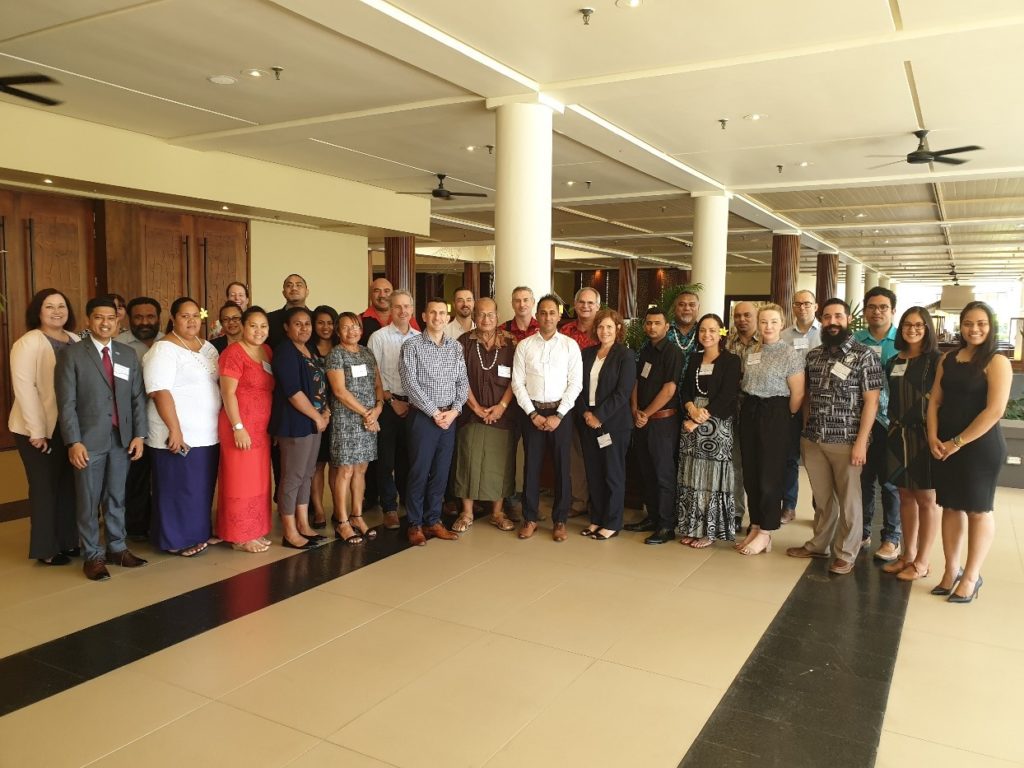
Figure 1. Participants at the Pacific Islands Cyber Capacity Building Engagement Conference

Based on recent findings, most Pacific member countries supported the idea of a Regional Computer Emergency Response Team (CERT) model. The successful implementation of a Regional CERT would depend on accessible resources and financial support; towards such a critical initiative that will ensure best practices for achieving regional security in the Pacific.
More than 40% of the respondents felt that CERT establishments and developing Cyber Crime laws were priority areas for their countries, seeking urgent commitment of their Governments towards these developments.
Safer Internet Center Fiji is engaged in research works around Internet safety and security together with regional partners, tirelessly promoting and empowering Online Safety in the Pacific by developing a protective regional network for socially conscious Internet users. Online safety education, Cyberbullying and Digital Literacy are some of their recent development initiatives.

Elvin Prasad is the Coordinator for Safer Internet Centre Fiji.
The views expressed by the author of this blog are his own and do not necessarily reflect the views of PICISOC.

September 17, 2019

Source: CIO from IDG click the link to read as originally published.

New Zealand will provide $10 million over five years to support Pacific countries as they develop national cybersecurity strategies, secure infrastructure and data, enhance online safety, and implement robust cyber-crime laws across the Pacific.

“Building cybercapability in the Pacific is one of the priority actions of New Zealand’s cybersecurity strategy,” says Kris Faafoi, minister of broadcasting, communications and digital media.

Faafoi says as part of this initiative, the government will be creating a dedicated Pacific Partnership Advisor role within New Zealand’s Computer Emergency Response Team (CERT NZ) to work with Pacific countries to lift their cyber security capability.

“With improvements in connectivity in the region, Pacific countries are seeing an increased risk of cyber security threats and New Zealand is committed to supporting our Pacific neighbours to provide a safe, secure online environment for their citizens and to maximise the benefits of a free and open internet while minimising cyber security risks,” says minister of foreign affairs Winston Peters.

September 16, 2019

Shaunalee Katafono

Shauna is a Marine Science graduate from the University of the South Pacific.

She completed her Bachelor of Science in Marine Science degree in 2014 and a Postgraduate Diploma in Marine Science later in 2018.

Before moving to Fiji in November 2016, she worked as a Fisheries Compliance officer in the Offshore section of the Fisheries Division for Samoa’s Ministry of Agriculture and Fisheries (MAF).

Her work in this area focused mainly on monitoring, control, surveillance and enforcement (MCSE) activities which often included dockside boarding inspections of fishing vessels to check compliance against national and regional fisheries-related regulations; licensing of domestic and foreign fishing vessels; collection of catch log sheets and updating relevant fisheries database management systems.

Shauna started TraSeable Solutions Pte Ltd, a traceability tech company, with her husband Ken in October 2017. They saw an opportunity to help improve the Fisheries sector in the Pacific given the need for digitisation of paper-based processes, accurate reporting, and transparency and traceability of seafood products leaving the Pacific for international markets.

There were no traceability technology companies operating in Fiji or across the Pacific at that time so they decided to utilise their ICT and fisheries experience to venture into the world of entrepreneurship.

Despite having no experience running a business, they knew they had the right skills and knowledge about the industry and could learn the entrepreneurial skills quickly along the way to make a positive impact.

Since her entrepreneurship journey started, Shauna would often find herself being the only female in a room filled with males during business meetings.

Experiencing this made her more determined to persevere in their business venture, especially as a businesswoman at the forefront of a tech company working in male dominated industries like fisheries and agriculture.

This has also helped her become more supportive of other women entrepreneurs, sharing with them the lessons she’s learned as an entrepreneur.

This year Shauna has been involved in several workshops to do with technology, women’s economic empowerment and entrepreneurship.

She was a participant at Pacific Connect’s network dialogue that was held in Brisbane in June with the theme ‘Pacific Women Entrepreneurs – Technology Influencers’.

She has been a part of the Pacific Connect community since then and will also be attending another Pacific Connect Ideas Exchange program that will be held in Sydney on 17-19 September, 2019.

Her involvement at the first Pacific Connect dialogue sparked a personal interest in building new networks and collaborating with other women entrepreneurs, specifically women tech entrepreneurs working in the areas of fisheries, agriculture and community development.

Soon after this dialogue, Shauna was invited to be a panelist during a session on ‘Leveraging the power of ICT for women entrepreneurs’ at a national consultation on ‘Catalysing women entrepreneurship in Fiji’.

Having bootstrapped her business with her husband, Shauna offers a unique perspective of being a proud Pacific Island woman at the forefront of innovative technology in the Pacific.

She offers entrepreneurial insights based on experience into the challenges and opportunities available in the Pacific and shares their experience in founding a tech startup that has gained international recognition for their work in the seafood traceability space.

Regardless of her Marine Science background, Shauna has gained deep insight into how technology can be used for good and to address challenges faced in the Pacific Islands.

Shauna is proof that you don’t have to have a tech background to be a tech innovator.

September 16, 2019

At each APNIC conference, there is a dedicated session for women in ICT. APNIC48 held in Chiang Mai, Thailand had a Women in ICT lunch session on Thursday 12th September.

The session was sponsored by IPv4 Global, about 100 people participated – with a female/male balance of approximately half and half.

The session was filmed and made available on Facebook Live through the APNIC Facebook account at the following URL: https://www.facebook.com/APNIC/videos/513469386148037/

The session consisted of an open forum over lunch followed by the contribution of three invited speakers: Narelle Wakely, Mary Rose Ofianga and Pensri Arunwatanamongkol.

During the first part of the session different topics were discussed at the tables, themed around challenges experienced by women in the ICT sector.

Summaries about these discussions were shared with the rest of the room.

The guest speakers then shared some insights from their personal stories.

Some of the most inspiring insights that were shared during thE session were about how in different economies women experience different challenges.

In South Asian countries women are not expected to do field jobs and usually end up doing documentation work.

While in Thailand and India, the ICT sector is a female dominated sector.

Mansplaining was discussed, this is something some men do to try to dominate women, explaining something that women already know and may even do better than them.

Also, a collection of amazing advice was shared:

• Be confident and empower yourself.
• Don’t be afraid to try, keep trying, have fun and if you fail try again.
• Learn by doing. Keep learning new things.
• Even when failing, be kind to yourself, worry less and enjoy life more. Listen to yourself and be true to yourself.
• Embrace the differences instead of trying to be more like men.

Guest speakers talked about the importance of team work to maximize everybody’s potential and the importance of women networking forums and communities.

Guest Speakers also talked about how all have a responsibility to make a change and create the right culture and for that, action needs to be taken by participating, being a role model, being a mentor.

The importance of empathy when suffering from bullying and impostor syndrome was also discussed.

To facilitate the discussions, the following questions were printed on cards and placed on the different tables:

  • What are your biggest challenges you have encountered in your IT career so far?
  • What advice would you give to your younger self now?
  • What tip would you recommend to show your inner self in a male-dominated environment?
  • Who are your female role models in the industry? Why?
  • Do you feel you can be your true self at work? Why? Why not?
  • How do you celebrate your achievements?
  • Have you suffered from Impostor Syndrome? How did you deal with it?
  • How do you balance your personal and your professional responsibilities?
  • « Go to Previous Page
  • Page 1
  • Interim pages omitted …
  • Page 23
  • Page 24
  • Page 25
  • Page 26
  • Page 27
  • Interim pages omitted …
  • Page 38
  • Go to Next Page »

Footer


Physical Address
of the Chapter
+1-111-111-111

© 2026 Internet Society Chapter

Copyright © 2026 · Internet Chapters on Genesis Framework · WordPress · Log in

  • Home
  • About Us
  • Board Business
  • Events
  • SIGs