• Skip to primary navigation
  • Skip to main content
  • Skip to footer
Picisoclogo

PICISOC.niue.nu

The Internet Society in the Pacific

Search

Search DropdownSearch Icon Join
  • Home
  • About Us
    • What is PICISOC?
    • History of PICISOC
    • PICISOC Members
    • Code of Conduct
    • PICISOC Netiquette Guidelines
  • Board Business
    • Current PICISOC Board Members
  • Events
    • PacIGF 2023
    • Pacific Internet Governance Forum (PacIGF)
    • PacINET
    • International IGF Reports
    • ICANN Meeting Reports
    • Pacific Regional Meeting Reports
  • SIGs
    • Research and Development Partners
    • Pacific Islands Education
    • Pacific Islands FOSS
    • Pacific Islands GIS/RS
    • Pacific Islands Internet Freedom

E-Talanoa Webiner on Cyber Security During and Post COVID19 Crisis

E-Talanoa Webiner on Cyber Security During and Post COVID19 Crisis

Register now: bit.ly/37vxjp7

A short bio of the Speakers

  1. Anne Dunn-Baleilevuka
    Commissioner for the Online Safety Commission or OSC, Anne is an executive leader of Fiji’s recently established Online Safety Commission or OSC. The OSC Fijians a space to resolve concerns and complaints with respect to online abuse such as cyberbullying and promote online safety for all Fijians. With a passion for collaboration Mrs Baleilevuka seeks to promote cyber safety in a cohesive and inclusive manner while maintaining respectful boundaries. With interests that lie beyond the digital realm, Anne is also an avid participant in youth empowerment especially of young women around the country.
  2. Torrin Marquardt
    Joined Standards Australia in January 2015. In her current role as International Engagement Manager, Torrin’s responsibilities encompass international policy and development management. This includes the development and implementation of standards related capacity building projects with National Standards Bodies and governments, primarily in the Pacific and Southeast Asia.
  3. Suetena Faatuuala Loia
    Is an active member of the Pacific Security Community. He is currently the Acting Chief Executive Officer for Information Communication Technology Division of the Ministry of Communications and Information Technology. He enjoys studying the bible, reading and experimenting on new technology through coding.
    LinkedIn: https://www.linkedin.com/in/suetena-faatuuala-loia-8a599238/
  4. Klee Aiken
    A Chicagoan lost in the Asia-Pacific, Klée is currently working as the Principal Pacific Partnership Advisor at CERT NZ, the national CERT for New Zealand. He works to build stronger partnership across the Pacific and with the global incident response community to support cybersecurity capacity building in the region. He is also a member of the Research Committee of the Global Forum on Cyber Expertise (GFCE), which works for more informed, complementary, and impactful cyber capacity building. Prior to joining the CERT NZ team, Klée was the Senior Advisor – Strategic Engagement & Capacity Building at APNIC, the Regional Internet Registry for the Asia-Pacific. In this role he worked to promote and realize APNIC’s vision of a global, open, stable, and secure Internet across the region’s 56 economies as well as internationally. He has worked on Asia-Pacific cyber issues since 2013 having also served as a GFCE Advisory Board member and as an analyst with the International Cyber Policy Centre at the Australian Strategic Policy Institute (ASPI).
  5. Kensly Joses
    CERT VU|Office of the Government CIO, Prime Minister's Office, Government of the Republic of Vanuatu
    PMB 9108, Port Vila, Vanuatu, SW Pacific
    Website: https://cert.gov.vu/

October 26, 2020

Register now: bit.ly/37vxjp7

A short bio of the Speakers

  1. Anne Dunn-Baleilevuka
    Commissioner for the Online Safety Commission or OSC, Anne is an executive leader of Fiji’s recently established Online Safety Commission or OSC. The OSC Fijians a space to resolve concerns and complaints with respect to online abuse such as cyberbullying and promote online safety for all Fijians. With a passion for collaboration Mrs Baleilevuka seeks to promote cyber safety in a cohesive and inclusive manner while maintaining respectful boundaries. With interests that lie beyond the digital realm, Anne is also an avid participant in youth empowerment especially of young women around the country.
  2. Torrin Marquardt
    Joined Standards Australia in January 2015. In her current role as International Engagement Manager, Torrin’s responsibilities encompass international policy and development management. This includes the development and implementation of standards related capacity building projects with National Standards Bodies and governments, primarily in the Pacific and Southeast Asia.
  3. Suetena Faatuuala Loia
    Is an active member of the Pacific Security Community. He is currently the Acting Chief Executive Officer for Information Communication Technology Division of the Ministry of Communications and Information Technology. He enjoys studying the bible, reading and experimenting on new technology through coding.
    LinkedIn: https://www.linkedin.com/in/suetena-faatuuala-loia-8a599238/
  4. Klee Aiken
    A Chicagoan lost in the Asia-Pacific, Klée is currently working as the Principal Pacific Partnership Advisor at CERT NZ, the national CERT for New Zealand. He works to build stronger partnership across the Pacific and with the global incident response community to support cybersecurity capacity building in the region. He is also a member of the Research Committee of the Global Forum on Cyber Expertise (GFCE), which works for more informed, complementary, and impactful cyber capacity building. Prior to joining the CERT NZ team, Klée was the Senior Advisor – Strategic Engagement & Capacity Building at APNIC, the Regional Internet Registry for the Asia-Pacific. In this role he worked to promote and realize APNIC’s vision of a global, open, stable, and secure Internet across the region’s 56 economies as well as internationally. He has worked on Asia-Pacific cyber issues since 2013 having also served as a GFCE Advisory Board member and as an analyst with the International Cyber Policy Centre at the Australian Strategic Policy Institute (ASPI).
  5. Kensly Joses
    CERT VU|Office of the Government CIO, Prime Minister’s Office, Government of the Republic of Vanuatu
    PMB 9108, Port Vila, Vanuatu, SW Pacific
    Website: https://cert.gov.vu/

October 25, 2020

By Swaran Ravindra

Swaran Ravindra

As an academic who teaches ICT academia and TVET programs to both school leavers and industry experts, you just cannot help looking at everyday things through a highly “technical”, yet feasible perspective. You tend to continuously look for ways in which ICT could improve the lives of your people. Coming from a background where I have worked with women and young girls, I have the had privileged of spending time in understanding women, our strengths, our fears, our access and limitations, perceived weaknesses, challenges and how we can explore the most unimaginably wonderful avenues and soar new heights.

I am honoured to be selected to represent my country, my home, Fiji in the Asia Pacific Regional Internet Governance Forum 2020- Overarching theme of Internet Governance for Good: Norms, Standards and Mechanisms. I was told that the selected participants were picked after assessing over 350 applications, so one can imagine how grateful I am to be one of the selected participants.

While I prepared for the conference: A few observations during the week

My husband and I planned a trip to see the northern side of Fiji. I thought it would be great to have some peace and tranquillity while I attend the virtual conference over 4 days and to experience the beauty of this quaint little town which I had heard so much about. So we stayed in a nice Airbnb up in the mountains of beautiful Savusavu. To my amazement, every day while I was there, I got to meet people and witness situations which made me realize how important it is for Fiji to have global visibility in every discussion pertaining to Internet Governance. There are so many real-world issues which our people face within their daily lives. Some have resiliently fought on, while some have embraced the disparities and accepted them as their norms.

I met a young grandmother of 36 years, who was also the housekeeper of one of the places where we stayed. On the 4th day, I invited her to have a cup of my specially brewed masala tea. Over tea, she had a few questions for me: “What do you do for a living, why are you on the computer, who cooks in your house, is your husband ok with you working, do you have children”. Most of her questions stemmed from admiration of what she saw as an “independent, working woman”, an opportunity she says many like her see as a luxury. She told me she has 7 children with her abusive ex-husband, and though is now in a happy relationship, she can’t have more kids because she has “had a procedure” done which she thinks is irreversible. I quickly showed her some free apps on my phone which helps me monitor my health. It also tells me my ovulation cycles and is loaded with information about reproductive health, which is customized according to me and gives predictions based on my daily input about simple things such as the amount of water I had, exercise, sexual health etc. She was pleasantly surprised to know that the simple questions she thought had no answers, can be answered through a basic smartphone. She told me that in her house, the boys get to have smartphones and internet access. In the little time that I had with her, I showed her how to use Google, how to get help and support for domestic violence, some simple free apps which are helpful for education, health, farming, DIY projects that could lead to earning some side income. The schools and communities I visited had little to no access to technology. I wondered how challenging it must be for people to get access to timely, accurate information, and how important it is in the wake of the pandemic, and in challenging times such as the hurricane season. It is wonderful how technology can change lives for the better.

The learnings of the APrIGF and its application to the Fijian/Pacific Context (4 thematic areas):

Thematic Area 1: Cybersecurity, Safety and Trust

This set of presentations focused on policies, issues, solutions and repercussions of being part of the digital world. To have good Internet governance, we need all stakeholders involved to discuss the rules, policies, standards and practices that coordinate and shape the global cyberspace, which Fiji is very much part of. As we have increased access to the digital world, we face additional challenges around misinformation and disinformation, which is definitely not needed especially while we battle through the pandemic and its repercussions.

Disruptive technologies including those thanks to the introduction of IoT, 5G, Industry/Education/Agriculture 4.0 and now 5.0, have enormous benefits for the Pacific region at large, but we cannot ignore the need for our people to be completely cognizant of the cybersecurity issues which we are being exposed to. Fiji struggles with cyberbullying, suicide, mental health issues, fraud, and crime which whether technology may have been a part of, either intentionally or unintentionally. In order to leverage technology for the benefit for all, we need legislation and regulations which promote good internet governance. The European Union’s Cyber Diplomacy Toolbox is a good resource for benchmarking can be and needs to be explored by policymakers, universities and organisations in the Pacific. Computer Emergency Response Teams (CERTs) can be set up by organisations as well.

Contrary to the popular yet archaic Top Down approach used in most management structures, a Bottom-up collaboration and cooperation amongst multi stakeholder groups can help developing countries such as ours to form the basic building blocks of trust.

When we create cyber norms, we also set standards of acceptable behaviour in the cyberspace. We need to start identifying and formulating methodologies and tools that are needed to help people use the Internet and digital technology with confidence, and as stakeholders, we need to realise our roles in enabling that trust.

Thematic Area 2: Digital Inclusion, Gender Equality and Diversity

This series of sessions focused on realistic examples of how the digital divide was addressed through the initiatives of key players and stakeholders in the countries who presented their cases. Digital inclusion for everyone is important to help achieve sustainable development goals as envisaged in the United Nations Sustainable Development Goals (SDG) programme. Universal Acceptance (UA) articulates the fundamental requirement for a truly multilingual and digitally inclusive society. For Fijians, this means, our people, as users of the internet have the basic right to have access to it in iTaukei and Fiji Hindi, including the ability to include more languages as we diversify further.

All stakeholders, including the public and private sector, need to collaborate and devise strategies for promoting and implementing digital inclusion activities. Our stakeholders are the very people who form the parts of the Internet infrastructure. Stakeholders should be made of representatives of each group of people to ensure their voices are heard. These are our regulators, educators, suppliers, techies, who all work together to ensure our people are connected. The quality of access we have must reflect the diversity of individual experiences, cultures and legitimate developmental needs in all societies, encouraging people to create local content on the Internet in their own languages. Our education system must be updated to teach young people to use the Internet for good, to understand and respect human rights, and how to create technologies which supports the values of diversity and equity of all our citizens, so NO ONE is left behind.

Information literacy and digital literacy should be understood as life skills essential for citizenship, particularly because Fiji is moving toward eGovernance. Our people need to be able to confidently perform their daily business-critical functions, do research, have access to education, and to participate in government initiatives processes, and at the same time be able to maintain their health and protect the environment against climate change issues. Our internet needs to support us in doing all this and more.

We need to have networks that are affordable, reliable and we need to ask ourselves: Is EVERYONE included.

Thematic Area 3: Human Rights and Ethics

This series of sessions highlighted the fundamental rights of every citizen in terms of access to information and strategies for inclusion. Human rights and ethics must be at the core of our interests when developing online applications and services as well as the design of regulatory approaches and normative frameworks governing the Internet. Good policies must come with self-explanatory definitions which are easier to interpret by any citizen. We need to have explicit laws on protecting digital rights, however, we also need proper definitions to be established and understood universally, and yet in context with our own countries. International agreements need to be formed in collaboration with all countries and a fundamental level of protection for all digital citizens should be discussed. Such discussions should include ethical codes, standards and best practices as well as regulatory approaches which help translate the concerns around human rights and ethics into realistic goals. This needs to be done in ways in which the privacy of all individuals are protected yet issues are addressed. Stakeholders will need to get together in combined, rather than isolated efforts and work with a holistic approach to formulate strategies to remediate wherever possible.

Thematic Area 4: Innovation and Development

This series of presentations focused on leading sustainable technologies and the need to include stakeholders in the discussion for any technology that is designed with the intention to assist them. In Fiji, some of the many issues we are dealing with are misinformation/disinformation, adjusting to the new normal, creating an ecosystem of sustainable ICT, the efforts towards climate change, addressing gender-based violence, the inclusion of the disabled communities, the inclusion of the marginalized communities, LGBT rights, sustainable lifestyles, businesses and economy. Fortunately, ICT can be used to provide solutions to these and many other issues. However, we need to have discussions around digital innovations and transformations and how it can assist in our issues such as remote delivery of social services, online education, social change from the COVID-19 pandemic. We need to continuously develop technology and look for ways in which the internet community can positively impact our communities as a whole. For this, we need our youths, to engage in collaborative dialogues regarding internet governance, as more than 50% of Fiji’s population is under the age of 30. Principles of openness ethical codes of human rights and trusted technical standards, and inclusion for all be embedded into every policy, regulation and innovation of technical solutions which help bridge the gaps for digital inclusion.

In Fiji, over 13.7% of our population lives with one or more impairment. In the Pacific region, over 1 million persons live with impairments. With at least 1 NCD related amputation every 8 hours, the number of citizens who need assistive technologies will increase exponentially. The availability of smartphones, the presence of more than 3 ISPs and the internet penetration rate of 97% should mean that we have the right variables in place to close the gaps of the digital divide. However, we need to learn from international best practices to ensure technological innovations and development is with needful purposes.

Plagues and pandemics have been changing the course of history from as early as 541 AD (Justinian Plague), which killed in multitudes, and centuries later, we are faced with COVID 19 which is perhaps going to be the only pandemic that most people of “this time” may have ever see. However, the experience of COVID-19 clearly showed us that we were never quite prepared to deal with a pandemic. Thankfully, unlike the plagues and pandemics of those days, the internet has had tremendous contributions to ensure many of us can continue to “work from home”, be in safe isolation, been the backbone of many cloud-based infrastructures by providing the frontliners with information for better, and timely decision making. From making an instant clinical decision through cloud-based EMRs to the search for a vaccine, the Internet as well as the many techies who make continuity possible have been unsung warriors which continues to thrive to help us adjust to the new normal. Therefore, from 2020 onwards, we hope to see pandemics in Business Continuity Plans. However, just as we learn about basic safety rules from early childhood to retirement, the use of technology calls for continuous security in the cyberspace. Need for frameworks and standard were highlighted in almost all the topics of discussion. However, these frameworks need to be inclusive, supportive and most importantly in complete cognizance of the issues of the those who are affected the most by such policies and solutions which are made pertaining to those decisions.

To have digital inclusion, digital literacy is crucial, while not forgetting the fundamental rights of the citizen. Technology should not be “imposed”, but rather adaptable, scalable, reliable and transitioned through the inclusion of every person whom it is designed for.

APrIGF is an excellent platform to discuss technical strategies and solutions to pressing issues which the Asia Pacific region faces. It brings together industry experts, policymakers, regulators, vendors, academics and researchers who have substantial experience and knowledge in their areas of expertise. Fiji is blessed with lush rainforests, potent land and oceans. Our people are full of wisdom, humbleness, love and respect. We have a beautiful infusion of different diasporas which has given birth to some rich cultural experiences and ethnic indigenous knowledge. Yet we are well aware of the issues and trigger warnings we have. We need to protect our children, our people, we need to give the best healthcare to our women, elders men, we need to protect our land, our oceans, our culture, heritage and ethnic/indigenous knowledge. And it is a great consolation to know that technology has certainly been helpful in all of these areas and more. While we have said to have 96% internet connectivity in Fiji, I must add that many islands, including where attended the conference from, is still struggling with legacy systems and archaic connectivity issues, which inherently impede the inclusion of our people to the digital world. After attending close to 9 sessions from all the above themes, I came to a realization as to how important it is to involve everyone in the discussions about good internet governance, digital inclusion and digital literacy. All stakeholders have crucial parts to play, and no solution can be developed without including those who need to use it the most. The quest to closing the digital divide needs to be addressed with holistic and multi-stakeholder strategies. However, the most preliminary step towards inclusion for all will be to first gauge the extent of existing disparities of inclusion in terms of ethnicity, socio-economic status, gender, disabilities, culture, traditions, and other factors which could act as indicators of the digital divide. As a researcher in assistive technologies for inclusion, the APrIGF 2020 was an excellent avenue to meet other fellows and experts who helped me understand the technologies that I intend to create. I have been able to identify gaps in my own knowledge, in the policies in my country, and more importantly, I am better prepared to research and carry out projects with other fellows and speakers who I met in the forum. I am looking forward to joining future APrIGFs where I can discuss the progress in the opportunities that I was able to identify in APrIGF 2020.

This article first featured on facebook.
Link: https://www.facebook.com/swaran.ravindra/posts/10223933625152226

October 22, 2020

Pacific women in ICT #PICwICT October meetup Tuesday 27th October 7pm Fiji Time. An introduction to IGF with our women in IGF experts in the region.

Registration link: https://bit.ly/34ngPgW

October 22, 2020

A report by Carole Cholai

Recently a separate mailing list was put together to capture the women subscribed to the Pacific Internet Society Mailing list which now forms the Pacific Women in ICT mailing list. An online registration form was shared amongst the group and online networks which 67 women registered to attend the 1st Virtual meet. From the 67 women who registered for the event, at most there were close to 33 that attended the meeting. Some joined in later and others had to leave earlier.

There were two main agendas for the meeting:

  • Brief 2 min introduction of each of the women
  • Update from each country present on who COVID-19 has impacted their country and operations and how they were able to handle situations in respect to their organisation and their role in ICT.

An interesting round of introductions with women present from Solomon Islands, Fiji, Tonga, Papua New Guinea, New Zealand, Nauru, Vanuatu, Cook Islands and Samoa each representing also various sectors in National Government entities, NGO’s , global organizations, Academic, Corporate and social enterprises. ICT professions and line of work included cybersecurity, ICT policy, academic staff, IT Analysts, ICT support, web and internet affordability and connectivity and ICT learning programs.

COVID impacts included the use of online collaboration tools for their organisations, some had to be involved in training their staff on how to use Zoom, provide support for remote workers (working from home), cut down on specific ICT programs.,.

Many expressed appreciation of having the e-meeting organised and looked forward to the next one.

Some other interesting points picked up during the introductions:

  • Many of the women were either single female in their team
  • There is a lack of ICT research identified throughout the Pacific and there is a need for more focus in this area
  • Many have started or are part of initiatives to promote girls or women in ICT
  • A need for more networking and sharing with other Pacific women in ICT

Thank you to PICISOC and those taking lead in organising the first online event.

You can view a recording of the event here.

Source: PNG ICT Meri
Link: https://pngictmeri-wordpress-com.cdn.ampproject.org/c/s/pngictmeri.wordpress.com/2020/09/24/pacific-internet-society-hosts-first-pacific-women-in-ict-virtual-meetup/amp/?fbclid=IwAR2pq9o40eCsAju5gttCQRbdX-WEof6Dx5rmCa2DNt8XI92yB11RZMZJx48

October 22, 2020

By Will Tibben

Thank you to all those who participated in the first “PICISOC E-Talanoa (inaugural): FOSS (free and open-source software) is free and its open but how does it work?”

Special thanks to panelists Edwin Liava’a, Ken Katafone and Ashley Maher. To learn more about these gentlemen check out their bios below. All are on linked-in and are very generous with their knowledge.

In summary, the webinar attracted about 16 participants (in addition to our panelists). There were a few technical issues (mea culpa). In the spirit of talanoa the quality of the discussion was excellent. Following are my notes from the discussion.

Edwin took us back to his early experience with SOPAC and his installation of a FOSS application that was deployed throughout power utilities in the Pacific which was later transferred to. He made the point that FOSS is well represented in many back end systems.

Ken backed up this observation by naming a whole range of installations at USP, Forum Fisheries Agencies and other examples. It is in the area of desktops where FOSS is yet to make an impact. Same can be said about mobiles. Ken is currently focusing part of his efforts on blockchain repositories which is free and open. There is ongoing support for hackathons which he hosts and use of social media data to develop social media analytics. This is one recent and important FOSS-related development.

Ashley provided a useful perspective of FOSS from an Australian perspective. He was able to provide details of a variety of high-profile FOSS deployments involving Australian Government Dept of Finance NSW Gov, UNSW and UOW Medical Informatics research.

The most pertinent points.

  • People don’t want software – they want their vision realised.
  • FOSS can be deployed in a variety of ways which can involve closed source applications. FOSS can be deployed in ways that provide autonomy and minimal lock-in with a vendor. This was seen in the Australian Government Finance Department deployment.
  • The NSW Government (Finance) deployment leads one to an understanding that value propositions are not always about money. Reflecting on the Pacific Ashley emphasized the autonomy that FOSS can deliver. Another important observation is the potential to localizing software to local language.
  • The discussion among panelists initially was led by WJT who asked Ken about his leadership in entrepreneurship. Hackathons have been held in Fiji, Samoa and Papua New Guinea. I was interested to see that his experience across all three countries was quite uniform. Disappointingly, he has found that there seems to be a diminishing skill set among young people who are interested in IT. Given the volume of relevant information that is freely accessible on the Internet (ie FOSS = Internet = ISOC) the absence of interest from young people to mine this free resource is indeed curious.
  • This eventually became a theme of the webinar where two members of the audience also supported this observation. One outcome suggested by Rohitash Chandra (UNSW) is to meet again in a webinar to develop a paper that can crystalize this issue and suggest some strategies that Ministries may want to address.
  • There was also a perception that free does not equal good. In order to get the feeling has acquired something worthwhile, it helps to spend money. Anything that can be obtained freely is perceived of less value when in, fact, the opposite is the case.
  • From the audience, there were questions about the impact of improved connectivity on future FOSS deployments. Both of the Pacific specialists indicated that the issue is connected to “bigger picture” issues about wholesale and retail availability of broadband. At this point it seems to be constrained by government regulation.
  • WJT adds at this point that bandwidth is only one constraint that needs to be over-come. Human thinking is still working at the same pace that it has since humans evolved into what they are today – it takes time for new ideas to emerge, communicated and then accepted. As Ashley pointed out, one factor that constrains FOSS is the reality that many IT specialists who have developed their careers on Windows are not going to voluntarily make their store of knowledge redundant by introducing new concepts. Learning new concepts takes time and effort – its much easier to stick with the
    familiar.
  • Another audience question focused on the mindsets that students bring to closed source v open source. Ashley responded by saying that there is essentially no difference in terms of teaching them. However, he took the opportunity to highlight the benefits that FOSS may have when going for a job. Students who are able to demonstrate an open source project on Github (for example) have an advantage over students whose code is locked away in a university-owned repository.

October 22, 2020

By TAVAKE SIMON HANA’AROA

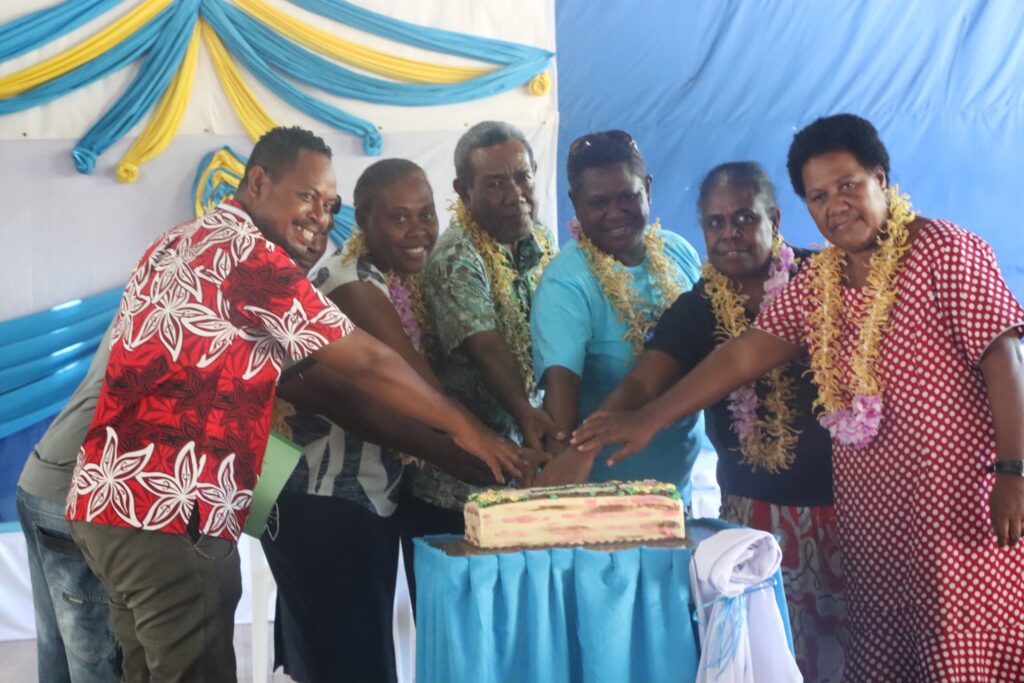
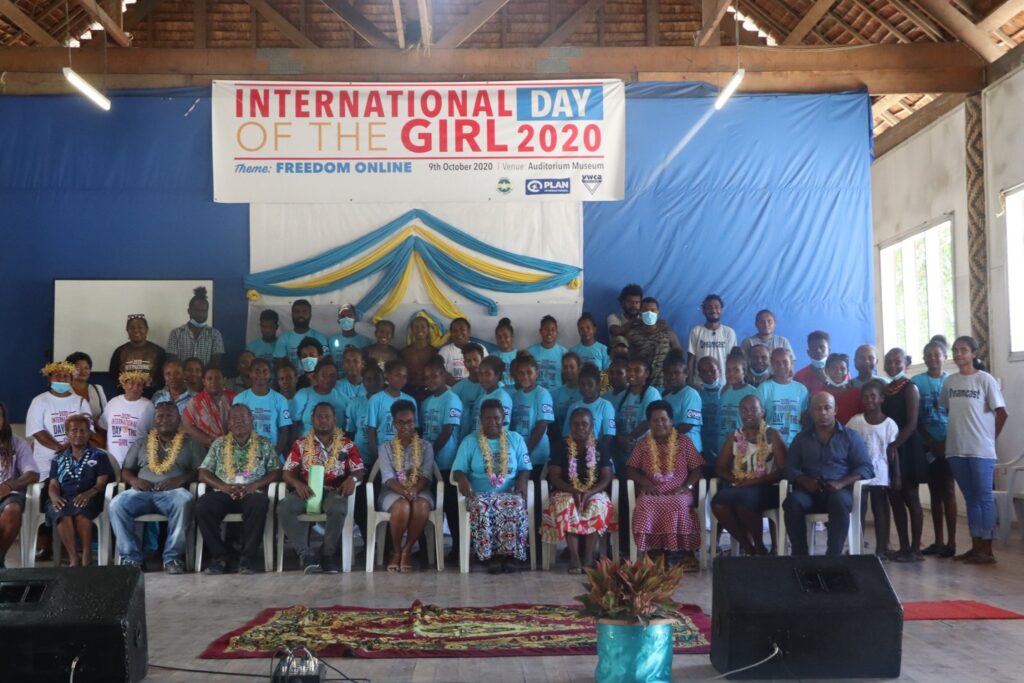
With the theme “Freedom Online” the Plan International Solomon Islands in a celebration that has been dubbed a success commemorated the International Day of the Girl (IDG) in Honiara today.

Held at the Auditorium, National Museum, The IDG is an annual event that that is celebrated around the world every October 11. For Honiara, it is pre celebrated (today October 9th) as the actual day falls on a Sunday.
For this year, the focus is on highlighting the harassment and abuse girls and young women face on social media because it silences girls’ voices and is a barrier to their leadership. The Covid-19 lockdown will have worsened the experience for many.

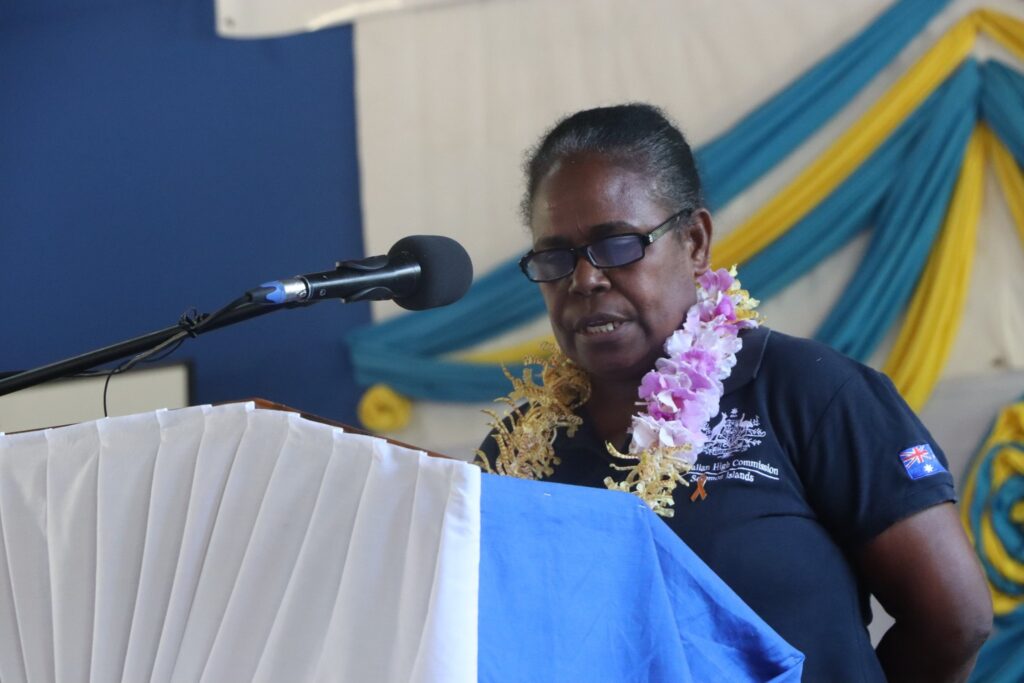
Today’s program involved Speeches from guests including The British High Commissioner to Solomon Islands, Dr. Brian Jones, Senior Program Manager, Gender (DFAT) Debbie Sade, reps from the City Council, YWCA, and as well a representative from the Youth Champions including a drama performance played by Dream Cast Drama group which comprises of Tuvarahu youth.

In his speech, Dr. Brian Jones had called for action on how to achieve a more equal environment online and a safer environment for girls and women online.

The Beijing Declaration is the first to specifically call out girls’ rights. On December 19, 2011, United Nations General Assembly adopted Resolution 66/170 to declare October 11 as the International Day of the Girl (IDG), to recognize girls’ rights and the unique challenges girls face around the world.

IDG focuses attention on the need to address the challenges girls face and to promote girls’ empowerment and the fulfillment of their human rights.

This article first appeared on Facebook.

  • « Go to Previous Page
  • Page 1
  • Interim pages omitted …
  • Page 8
  • Page 9
  • Page 10
  • Page 11
  • Page 12
  • Interim pages omitted …
  • Page 38
  • Go to Next Page »

Footer


Physical Address
of the Chapter
+1-111-111-111

© 2026 Internet Society Chapter

Copyright © 2026 · Internet Chapters on Genesis Framework · WordPress · Log in

  • Home
  • About Us
  • Board Business
  • Events
  • SIGs