• Skip to primary navigation
  • Skip to main content
  • Skip to footer
Picisoclogo

PICISOC.niue.nu

The Internet Society in the Pacific

Search

Search DropdownSearch Icon Join
  • Home
  • About Us
    • What is PICISOC?
    • History of PICISOC
    • PICISOC Members
    • Code of Conduct
    • PICISOC Netiquette Guidelines
  • Board Business
    • Current PICISOC Board Members
  • Events
    • PacIGF 2023
    • Pacific Internet Governance Forum (PacIGF)
    • PacINET
    • International IGF Reports
    • ICANN Meeting Reports
    • Pacific Regional Meeting Reports
  • SIGs
    • Research and Development Partners
    • Pacific Islands Education
    • Pacific Islands FOSS
    • Pacific Islands GIS/RS
    • Pacific Islands Internet Freedom

At-Large@ICANN67

At-Large@ICANN67

ICANN’s first virtual meeting, March 2020.

by Maureen Hilyard, ALAC Chair

The announcement by the ICANN Board Chair Maarten Botterman that his first ICANN meeting as Chair was going to be virtual due to the increased developments of the coronoavirus outbreak globally, would have been a great challenge for him in his new role. The ICANN community were given two weeks to prepare a whole changed programme to incorporate what we could salvage from our preparations for Cancun and to provide this in a way that would hopefully be just as effective, but virtual.

Following on from the ALAC's most recent policy advice to the Board on DNS Abuse, a decision was made during the CPWG (Consolidated Policy Working Group) that DNS Abuse was going to be the focus of our interventions in ICANN67, in line with what had been proposed in the At-Large Policy Platform. Despite the change in late February that the ICANN meeting was going to be virtual  rather than F2F, this did not change our original decision.

Jonathan Zuck, Vice Chair Policy, introduced the DNS Abuse topic by making a Call to Action for At-Large to speak out on DNS Abuse, especially in light of our request to the Board not to proceed with the next round of new gTLDs until due to what was being seen to be insufficient protections in place with regards to DNS Abuse and its impact on end-users. This session seemed to capture the attention of other sections of the ICANN community. Firstly, because it began with a home-grown video production on the issue (which unfortunately could only be shown during the presentation for copyright reasons) and then it concluded with a quiz on the topic which was won not surprisingly by the Vice Chair of SSAC, Julie Hammer. This introductory session really did demonstrate how far we have come with regards to engaging participation in policy development within At-Large, with many thanks to the innovations that are being introduced to this work by Jonathan and his CPWG team. His second DNS session was a more formal look at the technical implications of Contractual Compliance in the fight against a considered rise in the incidence of DNS Abuse. Active discussion involved ICANN's Head of Contractual Compliance, Jamie Hedlund, and the Vice President of Policy from GoDaddy, James Bladel, giving a registry/registrar's perspective on the issue.

Our next session was taken by APRALO's ALAC member, Holly Raiche on the use of the DNS over two transport systems - the transport layer and HTTPs and the policy implications of encrypted DNS. While the transport systems have some overlap, end-users would not notice because the difference only affects network operators. The purpose of encryption would be to provide greater protection of user privacy. The discussion however did look at the disadvantages as well as the advantages of the systems and involved SSAC's Barry Leiba who is their expert on DNS over DOH/DOT and Paul Hoffmann, ICANN's Principal Technologist. Holly recently gave a presentation on this and other At-Large sessions @ICANN to the APAC Hub community.

Our final policy session was taken by Vice Chair Joanna Kulesza whose "One World, One Internet" resulted in our best audience numbers and participation with the keynote speakers, Board Vice Chair Leon Sanchez, giving the ICANN Board's perspective on geopolitics;  Veni Markovski explaining UN perspectives on cybersecurity and cybercrime; NCUC's Milton Mueller's presentation focused on fragmentation which is a mismatch between territorial boundaries of government and the global connectivity of the internet. He saw governments as trying to fit cybersecurity into their national security systems and making names and numbers fit within boundaries. However, his conclusion was that this will not work because names and numbers are global. They work globally and to attempt to control them will not work. Before the audience became actively engaged, ex-Chair of the SSAC, Patrick Faltstrom, spoke about the various layers that make up the internet network and that each layer has its own responsibility for security for which there are major technical challenges. Gone are the days where one telecommunication system was owned by one player. At each layer of the network there are various players which increases the risk of fragmentation even within the network system itself. During the rest of the week's programme, we maintained our interaction with the Governmental Advisory Committee (GAC) where Justine Chew updated them on the status of At-Large's scorecards on Subsequent Procedures and Hadia Elminiawi, updated the EPDP on registration data. We also met with the Board and exchanged views on DNS Abuse and the PIR sale, as well as their attendance at the final wrap up session where they gave their views on the first virtual meeting. Any formal decisions about when F2F meetings will resume will be made during the next April Board meeting.

April 20, 2020

ICANN’s first virtual meeting, March 2020.

by Maureen Hilyard, ALAC Chair

The announcement by the ICANN Board Chair Maarten Botterman that his first ICANN meeting as Chair was going to be virtual due to the increased developments of the coronoavirus outbreak globally, would have been a great challenge for him in his new role. The ICANN community were given two weeks to prepare a whole changed programme to incorporate what we could salvage from our preparations for Cancun and to provide this in a way that would hopefully be just as effective, but virtual.

Following on from the ALAC’s most recent policy advice to the Board on DNS Abuse, a decision was made during the CPWG (Consolidated Policy Working Group) that DNS Abuse was going to be the focus of our interventions in ICANN67, in line with what had been proposed in the At-Large Policy Platform. Despite the change in late February that the ICANN meeting was going to be virtual  rather than F2F, this did not change our original decision.

Jonathan Zuck, Vice Chair Policy, introduced the DNS Abuse topic by making a Call to Action for At-Large to speak out on DNS Abuse, especially in light of our request to the Board not to proceed with the next round of new gTLDs until due to what was being seen to be insufficient protections in place with regards to DNS Abuse and its impact on end-users. This session seemed to capture the attention of other sections of the ICANN community. Firstly, because it began with a home-grown video production on the issue (which unfortunately could only be shown during the presentation for copyright reasons) and then it concluded with a quiz on the topic which was won not surprisingly by the Vice Chair of SSAC, Julie Hammer. This introductory session really did demonstrate how far we have come with regards to engaging participation in policy development within At-Large, with many thanks to the innovations that are being introduced to this work by Jonathan and his CPWG team. His second DNS session was a more formal look at the technical implications of Contractual Compliance in the fight against a considered rise in the incidence of DNS Abuse. Active discussion involved ICANN’s Head of Contractual Compliance, Jamie Hedlund, and the Vice President of Policy from GoDaddy, James Bladel, giving a registry/registrar’s perspective on the issue.

Our next session was taken by APRALO’s ALAC member, Holly Raiche on the use of the DNS over two transport systems – the transport layer and HTTPs and the policy implications of encrypted DNS. While the transport systems have some overlap, end-users would not notice because the difference only affects network operators. The purpose of encryption would be to provide greater protection of user privacy. The discussion however did look at the disadvantages as well as the advantages of the systems and involved SSAC’s Barry Leiba who is their expert on DNS over DOH/DOT and Paul Hoffmann, ICANN’s Principal Technologist. Holly recently gave a presentation on this and other At-Large sessions @ICANN to the APAC Hub community.

Our final policy session was taken by Vice Chair Joanna Kulesza whose “One World, One Internet” resulted in our best audience numbers and participation with the keynote speakers, Board Vice Chair Leon Sanchez, giving the ICANN Board’s perspective on geopolitics;  Veni Markovski explaining UN perspectives on cybersecurity and cybercrime; NCUC’s Milton Mueller’s presentation focused on fragmentation which is a mismatch between territorial boundaries of government and the global connectivity of the internet. He saw governments as trying to fit cybersecurity into their national security systems and making names and numbers fit within boundaries. However, his conclusion was that this will not work because names and numbers are global. They work globally and to attempt to control them will not work. Before the audience became actively engaged, ex-Chair of the SSAC, Patrick Faltstrom, spoke about the various layers that make up the internet network and that each layer has its own responsibility for security for which there are major technical challenges. Gone are the days where one telecommunication system was owned by one player. At each layer of the network there are various players which increases the risk of fragmentation even within the network system itself. During the rest of the week’s programme, we maintained our interaction with the Governmental Advisory Committee (GAC) where Justine Chew updated them on the status of At-Large’s scorecards on Subsequent Procedures and Hadia Elminiawi, updated the EPDP on registration data. We also met with the Board and exchanged views on DNS Abuse and the PIR sale, as well as their attendance at the final wrap up session where they gave their views on the first virtual meeting. Any formal decisions about when F2F meetings will resume will be made during the next April Board meeting.

April 20, 2020

by Maureen Hilyard

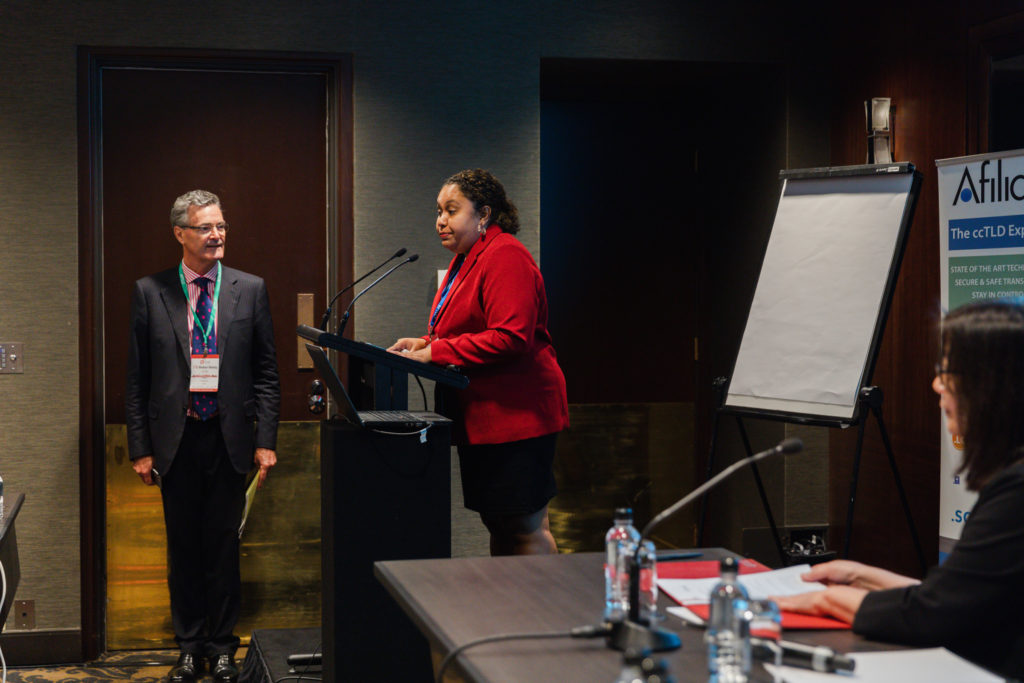
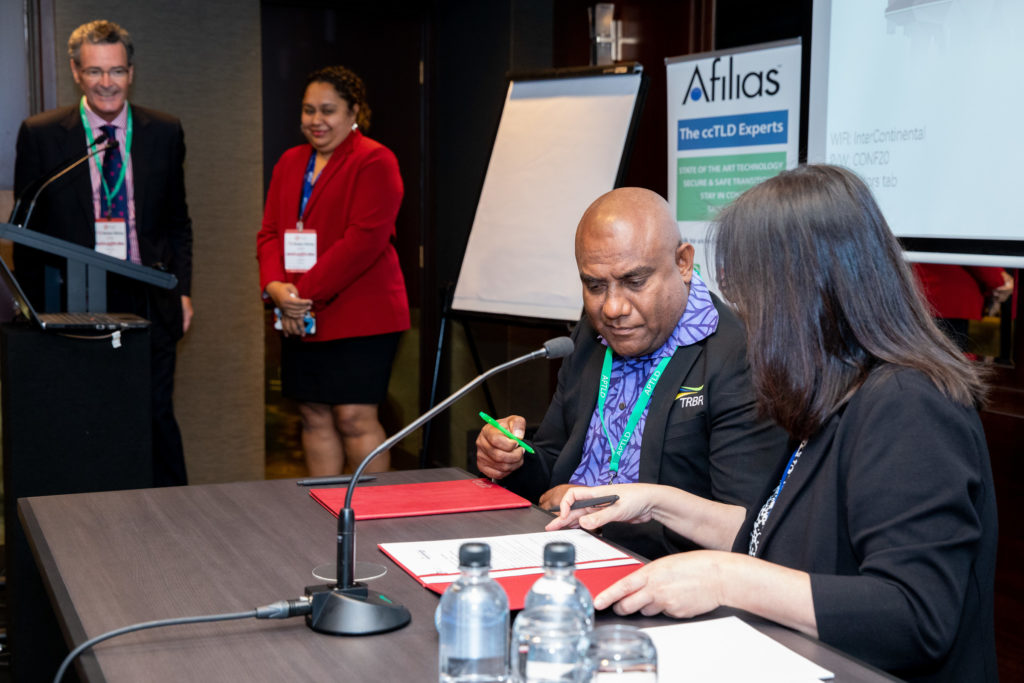
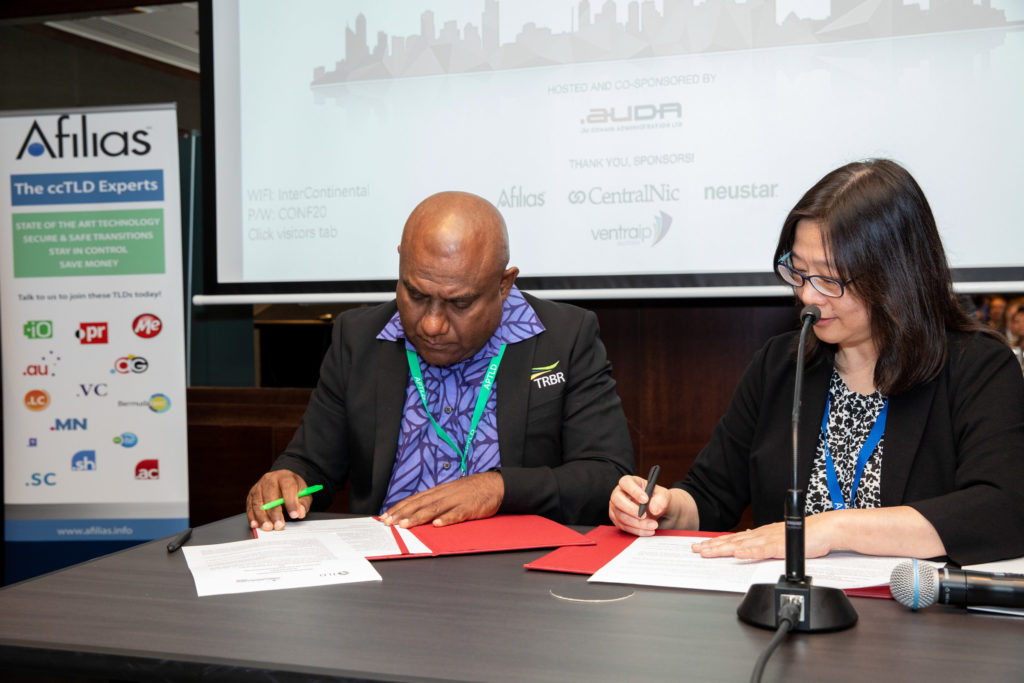
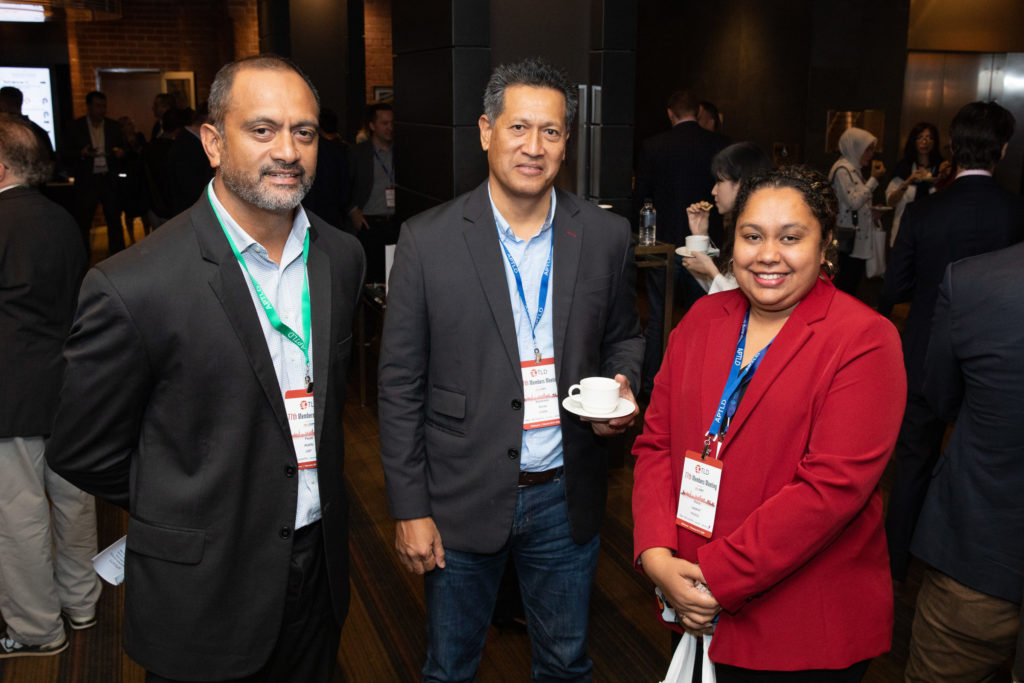
I was invited to attend the opening day of the APTLD meeting which was held at a separate Melbourne venue from APRICOT. After the presentations by ccTLD managers present, the finale was a presentation by PICISOC Board member, Cherie Lagakali and the signing of an MOU between PICISOC and APTLD by Board member Andrew Molivurae. It was a great opportunity to meet up with some of our ALS representatives from Papua New Guinea, Fiji, Tonga, Vanuatu and as well as with ICANN’s Oceania GSE VP, Save Vocea, and a good friend of PICISOC from InternetNZ, Keith Davidson. During the 2-day meeting at break-out discussions, participants shared their ideas and came up with a set of recommendations as to what could be the role of ccTLDs in the Internet Governance ecosystem. We would encourage PICISOC members to build collaborative relationships with their ccTLD managers and to encourage their support for our work in the region.

At the opening plenary, Rajnesh Singh from ISOC gave an update on ISOC and APRIGF activities; and Cherie Lagakali as mentioned above updated everyone on PICISOC activities before Andrew Molivurae added his signature to the PICISOC MOU with APTLD.  Brent Carey (.nz) facilitated a session specifically for Pacific Island ccTLDs.  APTLD General Manager Leonid Todorov is very keen to help regional managers to develop their vision and strategies that will enable an expansion of their ccTLDs. There are very few ccTLD members from the Pacific in APTLD.  

Presentations were made by Tony Saaga (.ws, remotely), Norman Warput (.vu) and Fereti Atalifo (.fj).  Other Pacific representatives who were at the meeting (that I knew) included Bill Tomon (University of Technology, PNG), Per Darnell (.nu), Jordan Carter (InternetNZ), Keith Davidson (Internet NZ), Ellen Strickland (InternetNZ and former PICISOC Board), Save Vocea (ICANN) and Stephen Deerhake (.as).

As additional information, Stephen is the administrator of ICANN’s Empowered Community which under California law, has 9 powers which it can use to ensure that the ICANN Board and its staff are accountable. Stephen and I from the Pacific region represent the ccNSO and the ALAC on this specifically empowered group within ICANN. The Board has to do something drastic before we have to take any action.

Networks: During the week there were some interesting discussions with the Internet Society about the relationship between ISOC and ICANN and how they could collaborate more. We also met with members of ISOC Australia and AuDA who hosted a cocktail event. At the opening APRICOT event we noticed a couple of gatecrashers from the Oceania Cybersecurity conference. They too had noted the hailstone storm of a couple of hours back as we had been walking to the venue. Needless to say, we had to go back to our hotel to change. They came armed with umbrellas. It wasn’t just cybersecurity they were looking after. It was a wet welcome to Melbourne but a great time together!

Some of the Pacific Team at the Eureka Skybar; at the APRICOT Opening Social; and at the APRICOT Birthday Party.

April 20, 2020

by Maureen Hilyard

The APRICOT 2020 meeting was held in Melbourne, Australia, despite alarm bells being raised about the coronavirus issue which alerted Australian border control, at that stage, to reject anyone who had been through mainland China. In the middle of it all, news arrived that ICANN had become a victim to the global reach of the virus and had cancelled its Cancun meeting so that online meetings to discuss the development of a virtual conference became a focus for the week, as well as trying to attend APRICOT sessions.


  • Welcome to Australia by Wurundjeri Elder Ian Hunter (2) APRICOT (3) APNIC Director General, Paul Wilson

Dot Asia Board Meeting: My first event on arrival in Melbourne was the Dot Asia Board meeting along with two other members of the APRALO leadership team, Chair Satish Babu from India and Vice Chair Lianna Galstyan from Armenia. DotAsia recently held their elections and now have two new members from Taiwan and Korea, as well as retaining Satish and myself who were up for re-election this year. I currently Chair the Board’s Governance Committee and Satish is the Chair of the Community Projects Committee.

AP* Retreat: Another meeting that was held before the APRICOT meeting began was the AP-Star Retreat which is an opportunity for the Asia Pacific IT community to give an update of our activities within the AP region. The AP* meeting was co-Chaired by Duncan McIntyre of the APNIC Foundation and Save Vocea, ICANN Oceania VP Global Stakeholder Engagement (GSE). Reports were provided by: APNIC (Paul), APNIC Foundation (Duncan), ICANN (Save), InterLab (Kanchana), APTLD (Hiro), APCERT (Yukako), ALAC (Maureen), APRALO (Lianna), APSIG (Satish), JPNIC (Akinori), ISOC (Adrian & Robert). This meeting was followed by the DotAsia AGM and dinner.

Duncan Macintosh and Save Vocea – co-Chairs of the AP* Retreat; (2) The AP* gathering; (3) The Dot Asia Dinner

APRICOT 2020: During the 4-day APRICOT meeting, there were several sessions that gave some interesting insights into what was being done in different countries. There were several Pacific participants involved in the week of training as well as a hackathon which took place in the week before the actual conference. A traditional welcome was given by an elder of a local Aborigine tribe. A keynote speaker at the opening plenary was one of the founders of the APRICOT organisation who also helped to create APNIC. This was David Conrad who is now ICANN’s SVP and Chief Technology Officer. David visited the Pacific when he attended and spoke about DNSSEC at the PITA meeting that was held on Rarotonga. The main speaker at the closing plenary was Professor Hanna Suominen of ANU, who explained the latest IT developments in eHealth and its application in developing countries – relevant to the Pacific and e-Health services to our isolated outer islands. 

Conference participants at APRICOT Melbourne, Australia

One of the highlights of the APRICOT gathering was meeting our newest Board member, Georgina Naigulevu and her husband Andrew, at the ISOC networking event put on by Internet Australia. It was great to be able to introduce Georgina to some other regional ISOC contacts. As for participation representation of the Pacific was significant: Georgina spoke at the APNIC Next Gen session about career development; Jonathan Brewer explained the Pacific Islands Peering Landscape; in the APNIC Global reports,  Rajnesh Singh reported on the regional ISOC events and Save Vocea updated everyone on the ICANN situation; and Saia Vaipuna of Tonga Cert explained how they dealt with business email attacks.

Unfortunately, the announcement of the cancellation of ICANN’s Cancun meeting caused several meetings to be called which in Pacific terms are always in the early hours of the morning. On one morning, I had 5 meetings with different ICANN groups between 3am and 9am. (Be warned.  For ICANN’s virtual conference, this is the same timeframe of most of the 4 main days of the conference – 3am – 9am NZ time where I am temporarily based).  Needless to say, I spent several more hours of each morning catching up on sleep when I really needed and wanted to attend these important sessions. Anyone interested in being the ALAC Chair in the future?  I can tell you about the pros and cons.

Georgina with other PICISOC Board members; at the Hackathon; and presenting on a panel about career development.

APRICOT celebrated its 25th birthday at this event which was held as a special occasion in a very impressive venue. I was very honoured to be sitting with the Chair of APRALO, Satish Babu, but also the Vice Chair of the Security and Stability Advisory Committee (SSAC), Julie Hammer of Australia. We also had Rajnesh Singh and Adrian Wan from the Singapore Hub of the Internet Society, and their Senior Director of Organisational Members, Robert Maylath. Also, at our table was Asia Pacific’s rep on the ICANN Board, Akinori Maemura of JPRS, Japan.  

April 20, 2020

The Asia Pacific Top Level Domain Association (APTLD) and the Pacific Islands Chapter of the Internet Society (PICISOC) have formally launched a partnership by signing a MoU at the opening of APTLD’s 77th Members Meeting and AGM in Melbourne, Australia.

The MoU was signed on February 20, 2020, with the aim of building a strategic partnership to explore possible areas of cooperation in the field of outreach and engagement of, and building capacity for ccTLD managers across the Pacific Countries and Territories.

The agreement will promote collaboration and exchange of good practices between APTLD and PICISOC in the interest of the internet-user community in the Pacific and establish the framework for cooperative activities for the Signatories’ benefit.

Leonid Todorov, APTLD General Manager said, ‘This partnership will establish cooperation in promoting capacity, especially in the field of ccTLD management by sharing expertise and knowledge for training courses and seminars; exchange information and experience in championing the Internet and Internet resources in the local community’.

He further said ‘PICISOC has been a key player in the Pacific region and we believe this partnership will allow us to collaborate in holding public activities, both offline and online, aiming at education and awareness raising among the At-Large community and ccTLD managers in the Pacific.’

‘We are excited to partner with APTLD,’ said Anju Mangal, Vice Chair of PICISOC Board. ‘This partnership will unlock full potential for our members and ccTLD managers and together we will be able to efficiently run outreach activities and capacity building programmes for our stakeholders across the Pacific.’

Ms Cherie Lagakali of PICISOC board said, ‘APTLD and PICISOC will work in tandem to address their members’ needs and bring together expertise and skills in Internet and technology development’.

As an indication of commitment to the partnership, PICISOC in collaboration with APTLD will team up with other key partners such as InternetNZ, an APTLD’s founding member, to facilitate the APTLD meeting in Fiji in September 2021.

As they move into this new partnership, APTLD and PICISOC will aim to support their members by facilitating dissemination, impact, promote the collaboration, and ultimately sharing of knowledge and good practices and innovative organizational-specific solutions. 

The joint efforts will support the continued expansion of APTLD and PICISOC across the Pacific

About APTLD and PICISOC

  • Asia Pacific Top Level Domain (APTLD) – Founded in 1998 as a non-profit entity and incorporated in Malaysia, APTLD (Asia Pacific Top Level Domain Association) is an organization for ccTLD (country-code Top Level Domain) registries in the Asia Pacific region.
  •  Pacific Islands Chapter of the Internet Society (PICISOC) – The Pacific Islands Chapter of the Internet Society is a chapter that represents the interests of users in the Oceania Pacific region. It focuses on local issues and developments in the Pacific region, and seeks to provide impartial advice to governments and the public on Internet-related matters that are relevant to Pacific Island people.

For more information, please contact Mr. Leonid Todorov, General Manager, APTLD – l.todorov@aptld.org or Ms. Anju Mangal Vice Chair of PICISOC Board, anjuvulamangal@gmail.com

Click to see the Press Release

April 19, 2020

BY DALSIE G. BANIALA (REPORT FOR PICISOC)

In the last two years serving as a MAG member representing a technical community in the pacific region wasn’t an easy ride for me.  Especially in 2018, when I was a full time National Regulator for Vanuatu, and at the same time heading the institution with its own mandatory obligations expected to be fulfilled and supervising daily office operations.  Moreover being the first female Regulator heading such an important Government institution, I can only describe my experience as one of the most haunting experience because the experiences I have been through. 

Despite all the experiences, I always remained focused, professional and did my very best to contribute to the internet community not just in Vanuatu but at the Regional level as well. (Excerpt)

Click to read the full report

January 14, 2020

There were only THREE Nominations for the PICISOC Board Elections.

Therefore, no Election was required as there were only three vacant Board Positions that were required to be filled.

The candidates provided the following Bios and on behalf of the Board, we would like to thank them for their commitment to step up and support PICISOC by “volunteering” their time.

Fakaaue lahi,
Emani Lui
**********************************

Georgina Naigulevu

I am an active Fiji Community member with a strong background in software development in the banking industry and would love the chance to give back by volunteering my advisory and technical skills.

I am a Software Developer by profession and work with clients on an individual basis to explore ICT Solutions to help their businesses.

I have also have a strong background in the financial sector and possess a broad range of ICT skills.

In addition one of my areas of expertise is in financial digital inclusion.

I am a strong advocate of Women In ICT and to creating digital businesses for Persons with Disability as well as promoting local Entrepreneurship within Fiji and the Pacific Region.

I have co-founded Community Project – Mobile Me Mapathon for Fiji to create an accessibility map of Suva as a pilot in partnership with our local Disability People Organizations.

Kanaan Ngutu

Kanaan Ngutu is a Government of Kiribati official working as a Senior ICT Officer at the Ministry of Information, Communication, Transport and Tourism Development. He is working on e-Government project and also engaged in Cybersecurity initiatives for the Government. He graduated from the University of the South Pacific in 2014 with a Bachelor degree in Computer Science and Information Technology. 

He is also a member of the Kiribati Computer and Internet Society where he is the current chairman. An alumni of the International Coperation for Assigned Names and Numbers (ICANN), Kanaan has participated in two ICANN meetings, ICANN 60 and ICANN 63 and also been to the Internet Governance Forum in 2016 and 2019.

Kanaan is an avid sports fan with a particular interest in football.

Cherie Lagakali

My name is Cherie Lagakali, I am a Database Consultant currently collecting information for APNIC Foundation’s pactraining workshops to be held in the Pacific in 2020. I first joined PICISOC in 2008, received a NetHui Fellowship in 2015 and became a PICISOC board member 2017-2019.  During my tenure on the board I have represented PICISOC in ICANN ALS, maintained dialogue for cybersecurity mapping initiatives in the region and joined the organizing committee for PacIGF.

I am an ICANN 63 and ICANN 65 Fellow, moderate the PICISOC mailing list and am also the webmaster for PICISOC site with Emani Lui.

On the board this year we began an initiative celebrating Pacific Women in ICT; promoting the stories of Pacific Women and their contribution to the community. Through this initiative we helped shed light on the difficulties faced by women in the area of ICT also promoting and encouraging other women to join the field.

I personally feel that there are still so many untold success stories in the area of ICT just waiting to be discovered – both men and women and I’d like to promote those stories. I also feel that PICISOC can be a medium of generating the right discussions in the area of cybersecurity, network security, network monitoring and analysis and just plain keeping the network up and running in the Pacific islands.

If we all just started talking to each other, we’d realise that we’re all facing or have encountered the same issues and somebody may have the solution for someone else while someone may have a better way of doing something and we could all progress together as a region. I find and enjoy the ability to link a need to a resource and bringing people together to solve problems. I feel that the Pacific has generated a lot of interest in the last few years and I’d like to help make sure that the focus is on the right things and places where the need is and where there is a potential to make a difference, change a community, change lives!

  • « Go to Previous Page
  • Page 1
  • Interim pages omitted …
  • Page 17
  • Page 18
  • Page 19
  • Page 20
  • Page 21
  • Interim pages omitted …
  • Page 38
  • Go to Next Page »

Footer


Physical Address
of the Chapter
+1-111-111-111

© 2026 Internet Society Chapter

Copyright © 2026 · Internet Chapters on Genesis Framework · WordPress · Log in

  • Home
  • About Us
  • Board Business
  • Events
  • SIGs