
• Skip to primary navigation
  • Skip to main content
  • Skip to footer
Picisoclogo

PICISOC.niue.nu

The Internet Society in the Pacific

Search

Search DropdownSearch Icon Join
  • Home
  • About Us
    • What is PICISOC?
    • History of PICISOC
    • PICISOC Members
    • Code of Conduct
    • PICISOC Netiquette Guidelines
  • Board Business
    • Current PICISOC Board Members
  • Events
    • PacIGF 2023
    • Pacific Internet Governance Forum (PacIGF)
    • PacINET
    • International IGF Reports
    • ICANN Meeting Reports
    • Pacific Regional Meeting Reports
  • SIGs
    • Research and Development Partners
    • Pacific Islands Education
    • Pacific Islands FOSS
    • Pacific Islands GIS/RS
    • Pacific Islands Internet Freedom

Cyber Safety in Solomon Islands

Cyber Safety in Solomon Islands

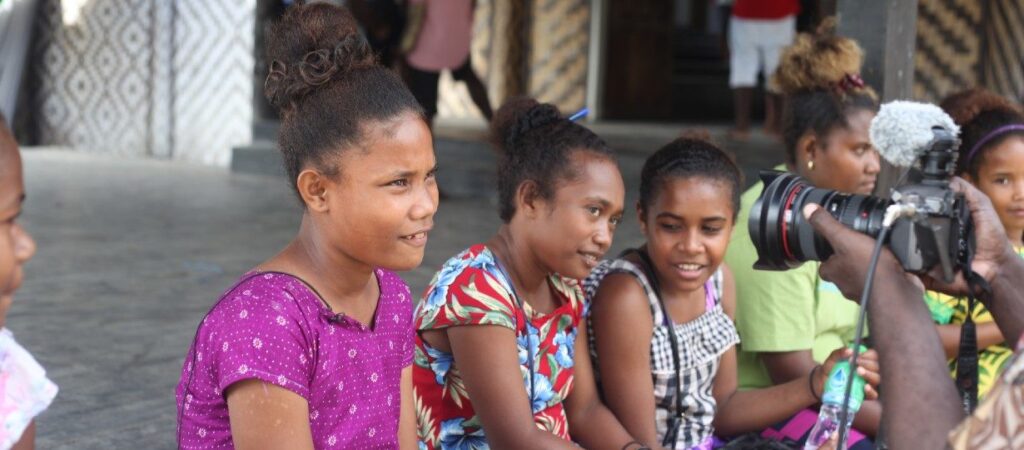
Making online spaces safer for young people

In October 2020, Plan International Australia, ChildFund Australia and Western Sydney University, funded by the Australian Government, launched Online Safety in the Pacific, a report highlighting the challenges and opportunities children’s technology use presents in the Pacific. Now, almost 10 months on, children and young people in Solomon Islands have come together to share their solutions for a safer online environment at the first ever National Youth Forum for Cyber Safety.

Internet access is transformative. It equals opportunity — to learn, to grow and to connect. However, in places like the Pacific, where cable internet and mobile phone usage is a relatively recent development, the same technology that brings opportunity can also expose children and young people to new risks and harm.

Over the last decade, the Pacific has seen a rapid expansion of mobile phone technology and internet access, largely thanks to the new Coral Sea Cable System linking Australia, Solomon Islands and Papua New Guinea.  Online safety is a particular concern in contexts like this, where internet users are not well versed in identifying online risks and protecting children from harm.

At this important juncture, it is critical that initiatives and programs addressing cyber safety and digital technology use understand the specific needs and wants of children and young people to ensure an appropriate balance between harnessing the opportunities and mitigating the risks and of digital technologies in the Pacific. And that’s where our research and the National Youth Forum on Cyber Safety comes in.

In October 2020, Plan International Australia, in collaboration with ChildFund Australia and Western Sydney University, launched Online Safety in the Pacific, a report looking at the challenges and opportunities children’s technology use presents in Solomon Islands, Kiribati and Papua New Guinea.

The research highlighted a critical gap in access to online safety and digital literacy programs, with children, young people and their families in Solomon Islands feeling under-equipped to reap the benefits of the digital age while also staying safe online.

Below are some of the key findings:

  • In Solomon Islands, children identify cyberbullying and hacking on social media as their greatest online concerns.
  • Overall, children are familiar with technical self-protective strategies, but only identified parents and carers as the primary support for their online safety.
  • Access to digital technology remains a key challenge, with 50% of children reporting they do not own or have reliable access to a digital device.
  • Children are excited to use digital technology to improve their English and access religious resources online such as bible apps.
  • Dominant gender roles play into children’s framing of online risks, with the vast majority of child participants reporting that they believe girls are far more at risk of harm online than boys.

While many children and young people have a sense of the ways digital technology might contribute to a better world, there is significant scope to encourage them to think more expansively about future opportunities and how digital technology might be mobilised to connect and to participate safely and meaningfully.

In response to these findings and together with Plan International Solomon Islands, Plan International Australia and ChildFund Australia are currently delivering a two-year online safety project in Solomon Islands, designed to increase awareness around children and young people’s online experiences, and equip young people, their parents, and community with the knowledge and skills to promote youth-led and gender-responsive approaches to online safety.

Check out this link for the full report: https://www.plan.org.au

This article first featured under the Plan International website.
Link: https://www.plan.org.au/news/uncategorized/cyber-safety-in-solomon-islands/

July 14, 2021

Making online spaces safer for young people

In October 2020, Plan International Australia, ChildFund Australia and Western Sydney University, funded by the Australian Government, launched Online Safety in the Pacific, a report highlighting the challenges and opportunities children’s technology use presents in the Pacific. Now, almost 10 months on, children and young people in Solomon Islands have come together to share their solutions for a safer online environment at the first ever National Youth Forum for Cyber Safety.

Internet access is transformative. It equals opportunity — to learn, to grow and to connect. However, in places like the Pacific, where cable internet and mobile phone usage is a relatively recent development, the same technology that brings opportunity can also expose children and young people to new risks and harm.

Over the last decade, the Pacific has seen a rapid expansion of mobile phone technology and internet access, largely thanks to the new Coral Sea Cable System linking Australia, Solomon Islands and Papua New Guinea.  Online safety is a particular concern in contexts like this, where internet users are not well versed in identifying online risks and protecting children from harm.

At this important juncture, it is critical that initiatives and programs addressing cyber safety and digital technology use understand the specific needs and wants of children and young people to ensure an appropriate balance between harnessing the opportunities and mitigating the risks and of digital technologies in the Pacific. And that’s where our research and the National Youth Forum on Cyber Safety comes in.

In October 2020, Plan International Australia, in collaboration with ChildFund Australia and Western Sydney University, launched Online Safety in the Pacific, a report looking at the challenges and opportunities children’s technology use presents in Solomon Islands, Kiribati and Papua New Guinea.

The research highlighted a critical gap in access to online safety and digital literacy programs, with children, young people and their families in Solomon Islands feeling under-equipped to reap the benefits of the digital age while also staying safe online.

Below are some of the key findings:

  • In Solomon Islands, children identify cyberbullying and hacking on social media as their greatest online concerns.
  • Overall, children are familiar with technical self-protective strategies, but only identified parents and carers as the primary support for their online safety.
  • Access to digital technology remains a key challenge, with 50% of children reporting they do not own or have reliable access to a digital device.
  • Children are excited to use digital technology to improve their English and access religious resources online such as bible apps.
  • Dominant gender roles play into children’s framing of online risks, with the vast majority of child participants reporting that they believe girls are far more at risk of harm online than boys.

While many children and young people have a sense of the ways digital technology might contribute to a better world, there is significant scope to encourage them to think more expansively about future opportunities and how digital technology might be mobilised to connect and to participate safely and meaningfully.

In response to these findings and together with Plan International Solomon Islands, Plan International Australia and ChildFund Australia are currently delivering a two-year online safety project in Solomon Islands, designed to increase awareness around children and young people’s online experiences, and equip young people, their parents, and community with the knowledge and skills to promote youth-led and gender-responsive approaches to online safety.

Check out this link for the full report: https://www.plan.org.au

This article first featured under the Plan International website.
Link: https://www.plan.org.au/news/uncategorized/cyber-safety-in-solomon-islands/

July 13, 2021

The Women’s Peace & Humanitarian Fund in the Pacific is looking to fund qualifying projects in Fiji, Vanuatu, Solomon Islands and Tonga that contribute to enhancing inclusive and gender responsive humanitarian/crisis planning, framework and programming.

Submission deadline: 16 August 2021.

Visit this site for more information: http://ow.ly/Nd4C30rMWGn

Article first featured under the UN Women website.
Link: https://www.unwomen.org/en/about-us/programme-implementation/2021/07/call-for-proposals-in-the-pacific

July 13, 2021

We’re looking for inspirational young Pacific Islanders who deserve recognition and support!

The Young Pacific Change Makers project aims to shine the light on young people and the contributions they’re making to their communities. We want to celebrate their achievements, share their stories and help raise awareness of the challenges faced by young people in the region.

If you, or someone you know, is aged 18-30 and making a difference in the community, then enter a nomination to become a Young Pacific Change Maker.

If selected you’ll receive training and support to share your story with the media, improve your public speaking and networking skills and learn how to utilise social media, to help you be at the centre of conversations in your community. Stories will be featured on radio, television and online across the Pacific.

This first stage of Young Pacific Change Makers is focusing on people in Fiji, Solomon Islands and Tonga.

We’re interested in people making a difference in all areas – agriculture, sport, music, art, business, food, health, disability, education, marginalised communities and climate change, to name a few. Individuals or small groups can be nominated.

You don’t need to be building things, running a big project or making lots of noise!

We’re interested in the quiet achievers too. Are you challenging stereotypes? Supporting others who are doing it tough? Finding new ways to contribute to the family income? Are you actively promoting equality, or doing your best to practice and preserve traditional cultures?

For some examples of the kinds of stories we’re after, take a look at the ABC’s 2021 Trailblazers winners, our previous Change Makers and Stay Strong Pacific series or check out the Heywire Facebook page.

Young Pacific Change Maker nominations are now open!

You can complete a nomination online, or download a form to print and email back to us. Please contact our friendly Youth Ambassador in your country with any questions.

Visit http://ab.co/changemakers for all the details and links to forms and emails about how to nominate as a Young Pacific Change Maker.

Keep an eye on our website or Facebook page for updates.

Young Pacific Change Makers is a project of the Pacific Media Assistance Scheme, an Australian development assistance project funded by Australia’s Department of Foreign Affairs and Trade (DFAT) and managed by ABC International Development.

This article first featured under the ABC International Development newsfeed on the Radio Australia website.
Link: https://www.abc.net.au/abc-international-development/calling-young-pacific-change-makers/

July 12, 2021

The COVID19 pandemic impacts gave the Women in IT Solomon Islands (WITSI) and the IT Society of Solomon Islands (ITSSI), the opportunity of taking its Girls in ICT Day event to collaborate with various schools in Honiara and the Provinces.

This year, 2021, marks the first time in history for WITSI and ITSSI to host a virtual conference to participate in and commemorate the International Telecommunication Union’s (ITU) International Girls in ICT Day together with various schools. Thanks to Zoom, this one-day event brought together senior female high school students and TVET female students from twenty-three (23) different schools within the country.

Robotics was the catch phrase of the day. More than 150 female participants from all over the Solomon Islands had the opportunity to build a robot and control the robot’s movements from an app on their mobile device. WITSI and ITSSI facilitators on that day, were astonished at how each group of girls tackled their hands-on tasks with building their robots finishing off ahead of allocated time. Their shrieks of delight when they had their robots running around on the floor was an encouraging experience for facilitators as this also shows we have some enthusiastic next generation of engineers participating in this event. Prizes proudly sponsored by Pan Oceanic Bank (POB) and Bemobile were presented to participants.

Participants had the opportunity to hear from the Woodford International School’s Robotics team that represented the Solomon Islands in the FIRST Global Robotics Competition in 2019 in Dubai. They were such an inspiration to our female participants and facilitators. We also had the wonderful opportunity to have the CEO of Robogals Global Ms Morgan Marshall, as our oversea guest speaker. She was truly inspirational, and she showed participants why we need robots today. She also spoke on the Robogals strategies and mission which was such an inspiration for WITSI as well.

Participants were also introduced to Web Development during the event. Brisbane based WITSI member, Sara Cave led the girls in an Introduction to HTML coding exercise. The girls learnt to write up some basic HTML coding and saw how it affected their simple webpage. It was a first for a lot of the participants to write up some basic code. It was truly an honour to have our very own Solomon Islands female web developer, show our girls that they too can become an IT professional and be proficient enough to be employed be it in Australia or anywhere else around the globe.

It is envisaged that the hands on activity with the robots and web development along with the Kahoot game-based learning platform and some tips on Cyber Security, would inspire and motivate our young females to take up STEM careers and to be the innovative and open minded engineers and ICT leaders for tomorrow’s challenge as we ‘Expand Horizons and Change Attitudes.’

Our sincere gratitude to the event’s major sponsors; The Australian Government through the Australia’s Solomon Islands Governance Program, Solomon Islands National Commission for UNESCO through the Ministry of Education and Human Resources Development, the Ministry of Communication and Aviation and the Pacific Islands Chapter of the Internet Society (PICISOC) for making this event a successful one.

June 25, 2021

Asia Pacific Regional Internet Governance Forum (APrIGF) serves as a platform for discussion, exchange, and collaboration at a regional level, and also where possible to aggregate national IGF discussions, ultimately advance the Internet governance development in the Asia Pacific region.

The Asia Pacific Regional Internet Governance Forum (APrIGF) 2021 event is now in it’s 11th year and will be held in a hybrid format, a combination of online participation and physical gatherings at local hubs, on 27 – 30 September, 2021.

A press release for the upcoming APrIGF and more information on how to get involved can be found on this site https://ap.rigf.asia/ or can be downloaded here.

Source: https://ap.rigf.asia/

June 14, 2021

At the center of Internet Governance, stands the principle of safe, secure and open Internet and web. The internet has revolutionized the world like nothing before. The invention of the Internet and Web sets a stage to affirm reality of opportunities and challenges particularly for the Pacific and small island developing states. In these turbulent months of uncertainty with the COVID-19 pandemic crisis, we are all at the forefront of an experiencing challenges that require a multistakeholder approach.

The Pacific Islands Chapter of the Internet Society (PICISOC) is a chapter that represents the interests of users in the Oceania- Pacific region. It focuses on local issues and developments in the Pacific region, and seeks to provide impartial advice to governments and the public on Internet related matters that are relevant to Pacific Island people. PICISOC and the Asia–Pacific Top–Level Domain (APTLD) formally launched a partnership by signing a MOU in 2020 to build a strategic partnership to explore possible areas of cooperation in the field of outreach and engagement of, and building capacity for ccTLD managers across the Pacific Countries and Territories.

As an indication of commitment to the partnership, PICISOC in collaboration with APTLD will team up with other key partners such as InternetNZ, an APTLD’s founding member and the University of the South Pacific (USP) to facilitate the APTLD meeting and the Pacific Internet Governance Forum in Fiji from 6 – 11 September 2021.

The USP, PICISOC, APNIC, ISOC, APTLD, InternetNZ, ICANN, IGF and key partners in the region will working together to host the Pacific Internet Governance Forum from 6 – 8 September, 2021 – a member’s forum to facilitate dissemination, impact, promote the collaboration, and ultimately sharing of knowledge and good practices and innovative organizational-specific solutions. The Pacific Internet Governance Forum will ensure a multistakeholder process, bringing together stakeholders from the Asia-Pacific region to join the Internet Governance debate and policy discussions to ensure that the internet remains safe, secure and open. 

Structure and outline

The Pacific Internet Governance forum will ensure a human-centric design thinking process to create new and innovative ideas to deal with the challenges faced by our members in the Pacific. The forum will not be limited to a specific area of expertise – it’s going to focus on people, processes, technology and the ecosystems to solve multifaceted problems in the area of Internet Governance. With support from key partners, we hope to create a multistakeholder approach and create opportunities for our key members to highlight their challenges and also to look at opportunities to promote knowledge sharing and identify ways to work together to solve a problem. We want a faster, better-informed process with the right solutions that will fit the Pacific context. 

The Pacific IGF committee organised a short survey to tailor it to the PICISOC audience to choose a Pacific IGF theme and sub-themes of common interest. Based on the response, the following theme were suggested by the Pacific members:

  • COVID-19 response and contingency plans on ICT and Internet Governance
  • Access and connectivity 
  • Cybersecurity
  • Digital Inclusion – e.g., addressing gender divide, digital divide and working with disability and vulnerable groups  •           Universal Connectivity for all
  • Secure, secure and stable internet e.g., cyber safety, cybersecurity initiatives
Objectives
  • Inspiring participants to think out-of-the-basket through case studies, new ICT and Internet-related initiatives and trends
  • Getting participants to focus on creativity and innovative thinking – presenting their initiatives, case studies and stories on how they defined a problem, determined a solution, implemented it
  • Finding new ways to solve a problem – what’s working and what isn’t work in their country or community
  • Strengthening a multistakeholder process using knowledge share fair, fireside chat, fishbowl techniques to facilitate sessions that might be outside of our comfort zone 
  • Driving participants to choose a particular focus area around the Pacific IGF theme and focus on a collaborative brainstorming session, as opposed to one-way presentations 
  • Highlighting key challenges, opportunities and lessons learned
  • Speakers should be able to tell a story to their audience so that they can ask the right questions and brainstorm to identify solutions to the problems 
Format/Dates

The Pacific IGF will take place back-to-back with the APTLD meeting from  6 – 10 September, 2020 – it will be a hybrid format (online with local hubs in the Pacific). Being inclusive and diverse has been our key priority – we have a diverse group of individuals who represent their communities – persons with disabilities, rural and remote communities, LGBTQI groups and other vulnerable groups. PICISOC has been established since 1994 and we have always had great representation from the small island states. We continued to focus on ICT and Internet issues for the Pacific Islands region, and it works with various organisations and governments in ensuring the continuing development of ICT in the region. 

The online participation will be set up using a hybrid format and this will be hosted and managed by the University of the South Pacific (USP) and

APTLD secretariat. USP has nine other campuses which have their own satellite connnectivity in Niue, Solomon Islands, Kiribati, Tokelau, Vanuatu, the Marshall Islands, Samoa, Tonga and the Cook Islands. Having the satellite and internet connectivity will be ideal for the hubs using a hybrid format. We are thinking of creating an in-person gathering in these hubs with multiple destinations and spoke format – this will also include an audience of online viewers that may involve interaction with a single platform or via social media networks. We will be having the hybrid learning combined with face-to-face to ensure that we create small hubs and communities of practice – it will be a blended version. USP will run the main event using the main agenda and the hubs will tune in from their countries – the hub will be managed by a facilitator who will ensure that they have discussions and break-out sessions to discuss the topics or issues.

Activities
  • Establish a working group committee, led by USP and PICISOC – working group to meet every month 
  • Conduct a short survey around the Pacific IGF them and sub-themes and invite speakers to suggest a list of workshops and sessions  •         Develop a creative agenda 
  • Invite a list of organisations and key stakeholders to participate in the Pacific IGF 
  • Invite a list of sponsors and financial partners to provide the resources for the event
  • Develop a spreadsheet of tasks and requirements for hosting the Pacific IGF o Assign responsibilities to working group – sub-groups 
  • Designing visibility products
  • Inviting media 
  • Designing the agenda for the Pacific IGF opening ceremony
  • Establishing fellowship criteria

A draft programme for the Pacific IGF can be found here or downloaded. The agenda is under planning by the multistakeholder organizing committee and the meeting will be hosted onsite with possibility for a meaningful online participation.

Pacific-Internet-Governance-Forum-Concept-note_March-2021Download

Other information on Pacific IGF 2021 can be found here.

  • « Go to Previous Page
  • Page 1
  • Interim pages omitted …
  • Page 5
  • Page 6
  • Page 7
  • Page 8
  • Page 9
  • Interim pages omitted …
  • Page 38
  • Go to Next Page »

Footer


Physical Address
of the Chapter
+1-111-111-111

© 2026 Internet Society Chapter

Copyright © 2026 · Internet Chapters on Genesis Framework · WordPress · Log in

  • Home
  • About Us
  • Board Business
  • Events
  • SIGs